

This site participates in the Amazon Associates Program.
If you find this article helpful and choose to purchase a product on Amazon through the links provided, your support would be greatly appreciated.
Hi, I’m Monolith.
From August 11 to August 16, 2023, I took a six-day solo trip to China.
This article is basically a travel diary, but along the way I’ll also include bits of information that may be helpful for anyone planning a trip to China.
For place names and other proper nouns, I will provide the Chinese characters, pinyin, Japanese notation, and pronunciation only the first time they appear. After that, I will write them in Chinese only.
The main route of this trip was:
Kunming (Kūnmíng, 昆明, Konmei)
↓
Guilin (Guìlín, 桂林, Keirin)
↓
Yangshuo (Yángshuò, 阳朔, Yōsaku)
↓
Shenzhen (Shēnzhèn, 深圳, Shinsen)
All long-distance travel between major cities was done by Gaotie (Gāotiě, 高铁), China’s high-speed rail system—the equivalent of the Shinkansen in Japan.

- Before Departure -Getting a Tourist Visa, and Booking Flights, Trains, and Hotels-
- August 11 -Traveling from Fukuoka to Kunming-
- August 12 -Kunming: Stone Forest and Mushroom Hot Pot-
- August 13 -Guilin: Reed Flute Cave and Luosifen-
- August 14 -Yangshuo: Li River Cruise and West Street-
- August 15 -Shenzhen: Dafen Oil Painting Village and Ping An Finance Center-
- August 16 -Going Home: Walking from Shenzhen to Hong Kong via Futian Port-
- Travel Cost Summary
- Related Books : Lonely Planet China (Travel Guide)
Before Departure -Getting a Tourist Visa, and Booking Flights, Trains, and Hotels-
At that time, a tourist visa was required, and obtaining it was quite a hassle.
To apply for a tourist visa, you needed to submit not only your basic personal information, but also your flight and hotel reservation details.
In other words, you had to book your flights and hotels before you could even apply for the visa.
Ideally, you should have your itinerary mostly finalized and your flights and hotels booked at least two months before your trip.
Otherwise, you may end up cutting it dangerously close like I did.
Timeline for Getting the Tourist Visa
July 9–22
- Finalized the itinerary, booked flights and hotels
- Filled out the tourist visa application form on the website
- Submitted the application form and flight/hotel reservation details by email
July 23–29
- Exchanged emails to decide the appointment date
- Submitted additional required documents by email
August 4
- Went to the Consulate-General of the People’s Republic of China in Nagasaki to apply for the visa
The Chinese Consulate in Nagasaki accepted advance reservations during weekday business hours, roughly between 9:30 a.m. and 2:00 p.m.
Afternoon of August 10
- The tourist visa still had not arrived, so I called to ask about it
- In the end, I had to go pick it up directly from the consulate
Apparently, Typhoon No. 9 had disrupted post office operations, so the visa had been scheduled to be mailed on the afternoon of the 10th.
My flight was at 9:00 a.m. on the 11th.
If I hadn’t called, the whole trip would have been over before it even started. That was close.
Well, to be fair, it was my own fault for applying so late.
As you can see, if you only begin preparing your tourist visa one month before departure, you could end up in the worst-case scenario of not being able to start your trip at all.
So yes—start preparing at least two months in advance.
August 11 -Traveling from Fukuoka to Kunming-
The original plan was to travel from Fukuoka to Kunming, departing around 9:00 a.m. and arriving around 8:00 p.m.
Fukuoka International Airport
↓ 1.5-hour flight
Incheon International Airport (Korea)
↓ 1.5-hour flight
Qingdao Jiaodong International Airport (Qīngdǎo Jiāodōng, 青岛胶东, Chintao Kōtō)
↓ 3.5-hour flight
Kunming Changshui International Airport (Kūnmíng Chángshuǐ, 昆明长水, Konmei Chōsui)
That meant two layovers.
The ticket cost 123,000 yen.
In reality, however, the last flight was diverted to another airport due to bad weather, and I ended up arriving much later than scheduled…
August 12 -Kunming: Stone Forest and Mushroom Hot Pot-
At midnight on August 12, I was still on the plane.
I was supposed to have arrived in Kunming at 11:45 p.m., so I remember half-waking up and thinking, “Huh?”
The vibration of landing woke me up. I checked the time: it was 1:30 a.m.
Finally, I thought. But as I started gathering my things, a flight attendant told me in English:
“We have arrived in Guiyang instead of Kunming due to weather conditions.”
My first thought was, “Where on earth is Guiyang?”
When I looked it up, I found out it was Guiyang (Guìyáng, 贵阳, Kiyō), roughly halfway between Kunming and Guilin on the map.
For a moment, I was in despair. How was I supposed to get to Kunming from here?
But then we were told to remain on the plane, so I thought we’d probably take off for Kunming again after a while. Relieved, I went back to sleep.
Then I woke up again to the noise around me. It was 5:00 a.m.
Still half-asleep and completely confused, I heard another announcement from the cabin crew:
“This flight has been canceled.”
I had no idea what was going on.
I was taken to the passenger terminal of Guiyang Longdongbao International Airport (Guìyáng Lóngdòngbǎo, 贵阳龙洞堡, Kiyō Ryūdōho).
From there, for about three hours until 8:00 a.m., the passengers surrounded the airline staff and loudly complained.
Everyone was speaking rapid-fire Chinese, and I couldn’t understand a word, which made the whole situation even more stressful.
The only thing I could grasp from the atmosphere was that the exchange kept repeating like this:
Passenger: “When can we get to Kunming?”
Staff: “We don’t know.”
I was exhausted, anxious, and had no idea what anyone was saying. Physically and mentally, I was at my limit. I honestly felt like crying.
Then, in the middle of all that, another passenger from the same flight started talking to me.
He was from Baoshan, a region near the Myanmar border. His accent was strong and he spoke so quickly that I couldn’t understand much of what he was saying, but he patiently used a translation app to explain the situation to me, lent me a charger, and helped me in all kinds of ways.
Thank you so much.
Eventually, around 9:00 a.m., it was decided that I could board an 11:00 a.m. flight to Kunming. What a relief.
At 1:30 p.m., I finally arrived at Kunming Changshui International Airport.
That was a 17-hour delay.
A university friend from Kunming came to pick me up.
He had even waited for me the previous night until around 1:00 a.m.
I was truly grateful.
I had heard Kunming was known as the “City of Eternal Spring,” but the sunlight felt tropical and it was much hotter than I expected. Sunscreen is definitely a must.
From there, we drove straight to Stone Forest (Shílín, 石林, Sekirin), about an hour and a half away by car.
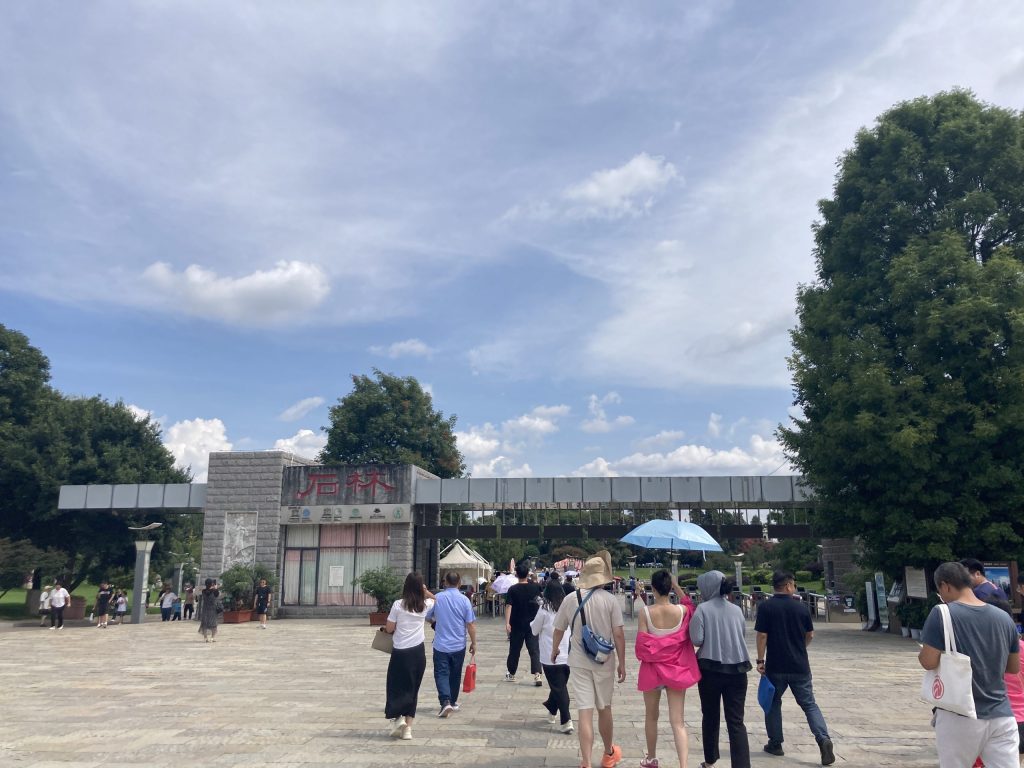
3:00 p.m. — Arrived at Stone Forest
I bought a ticket at the ticket counter. Payment was by QR code, either WeChat Pay or Alipay, both of which are also common in Japan these days.
Also, for entry to places like this, a passport is essential.
Here, let me briefly talk about payment in China.
QR code payment was the main method almost everywhere. There were not many places that accepted credit cards, and during my trip I did not see cash being used even once.
The two main payment apps were:
- WeChat Pay (Wēixìn Zhīfù, 微信支付)
- Alipay (Zhīfùbǎo, 支付宝)


Either one is probably fine, but my impression was that WeChat Pay was used more frequently.
Locals referred to them as “Weixin” and “Zhifubao.” Sometimes “WeChat” and “Alipay” didn’t get understood.
From there, I got on a shared shuttle bus and headed into the Stone Forest park.
Once inside, I’d say you need about 1.5 to 2.5 hours to look around.
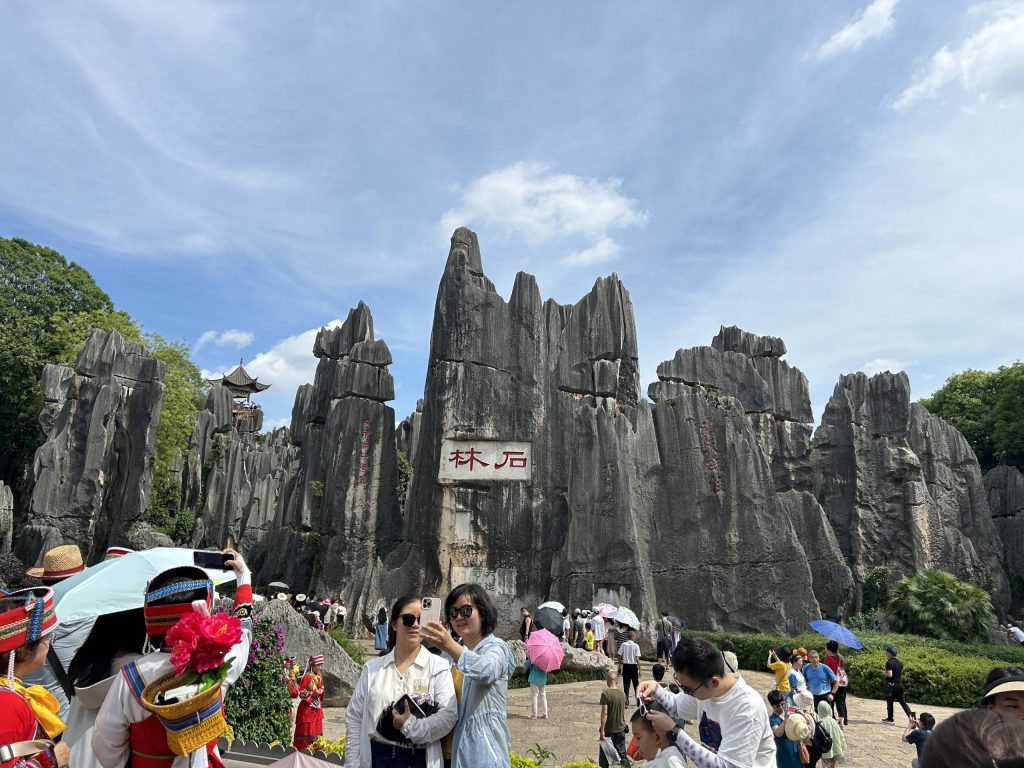
I quietly tagged along behind a tour group, had my friend translate for me, and basically freeloaded on the guide’s explanations as we walked.
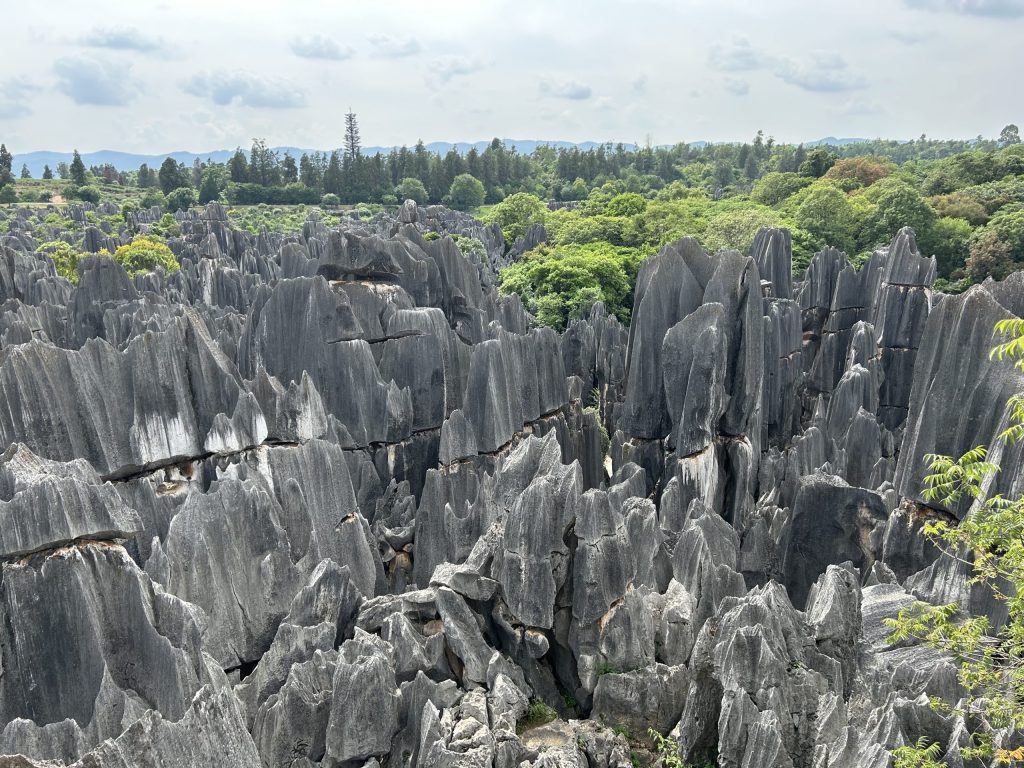
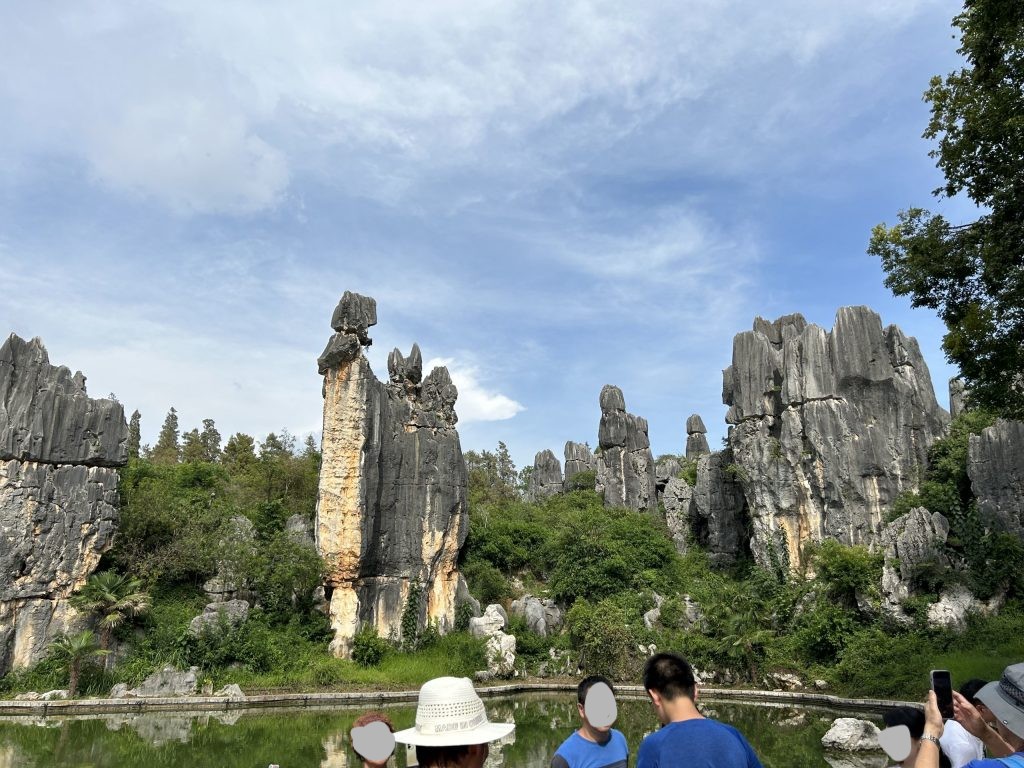
One bizarre rock formation after another. What a feast for the eyes.
This was exactly what I had come to see.
At one point I had been stuck unable to reach Kunming and even wondered if I should just give up and go home, but I’m really glad I forced my way here somehow.
Around 5:30 p.m., we left Stone Forest and headed to a mushroom hot pot restaurant in downtown Kunming.
Kunming is famous for its mushrooms, so I was really looking forward to it.
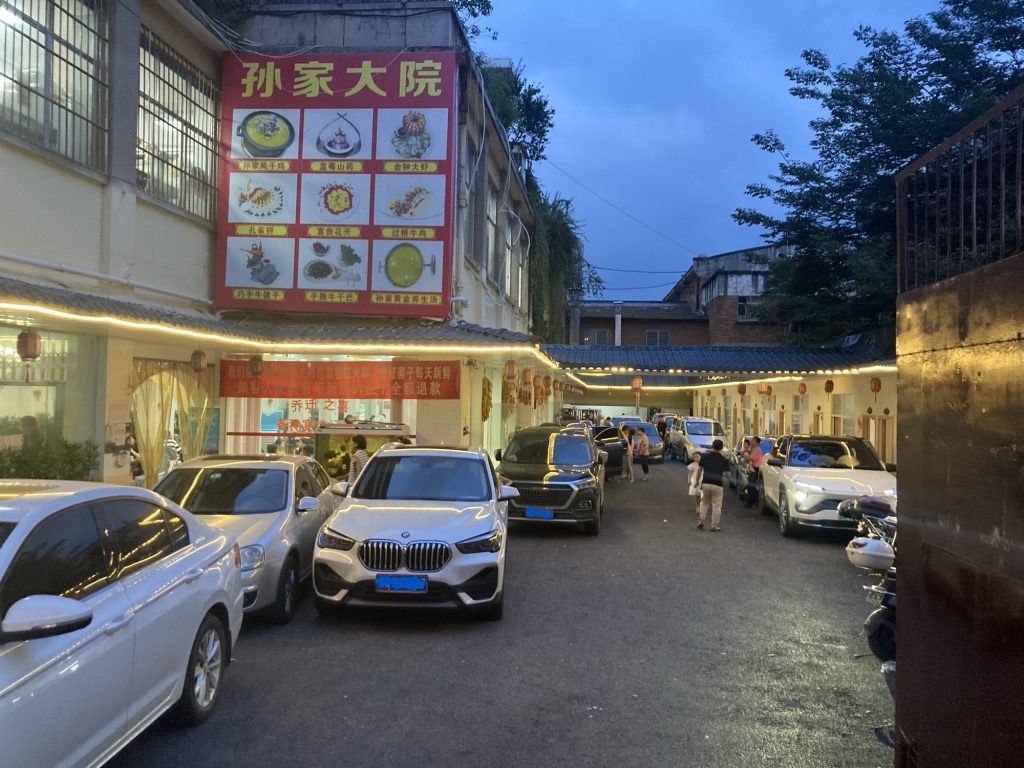
7:30 p.m. — Arrived at Sunjia Dayuan
This is apparently a well-known local restaurant chain in Kunming, famous for Yunnan specialties such as steam-pot chicken, stir-fried vegetables, mushroom dishes, and river fish.
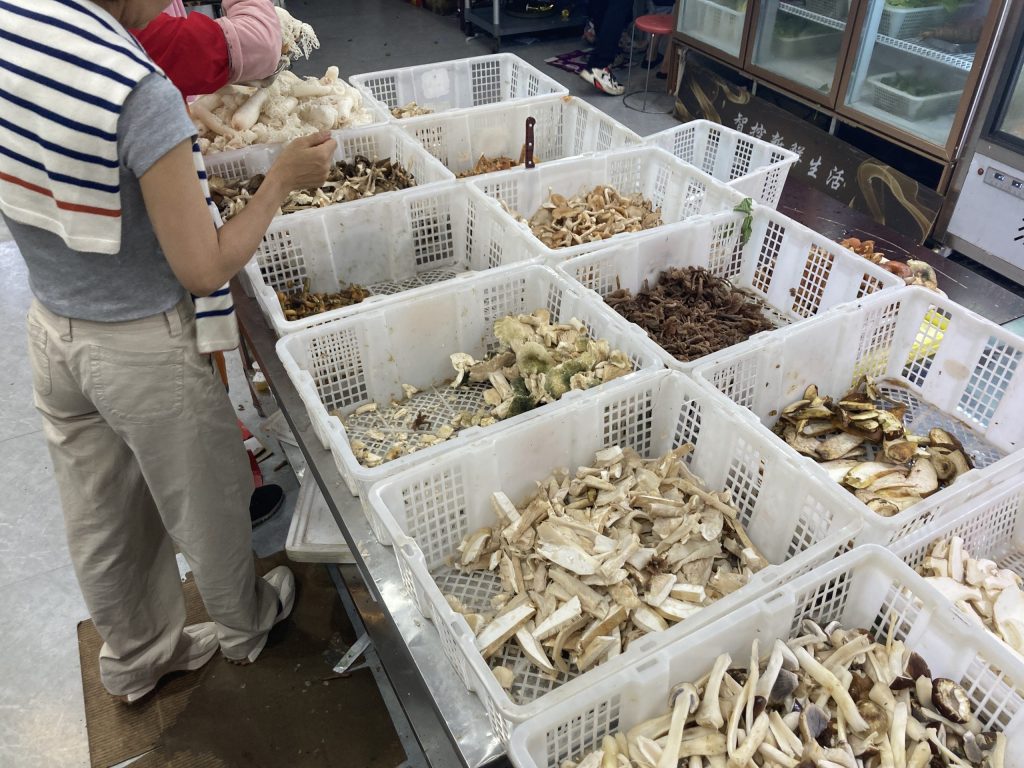
It seemed to be buffet-style.
So many mushrooms I had never seen before.
Honestly, some of them looked pretty wild.
You choose the mushrooms you want, pile them onto a plate, and bring them back to your table.
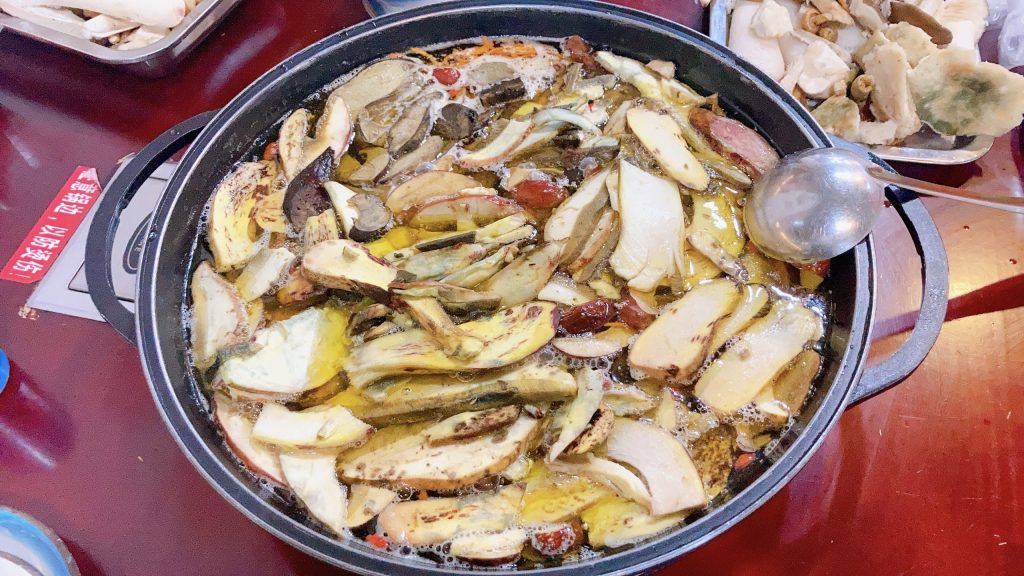
Then they have to simmer in the pot for a full 25 minutes.
Apparently, a lot of people get food poisoning because they can’t wait and eat them too early.
Seriously—just be patient.
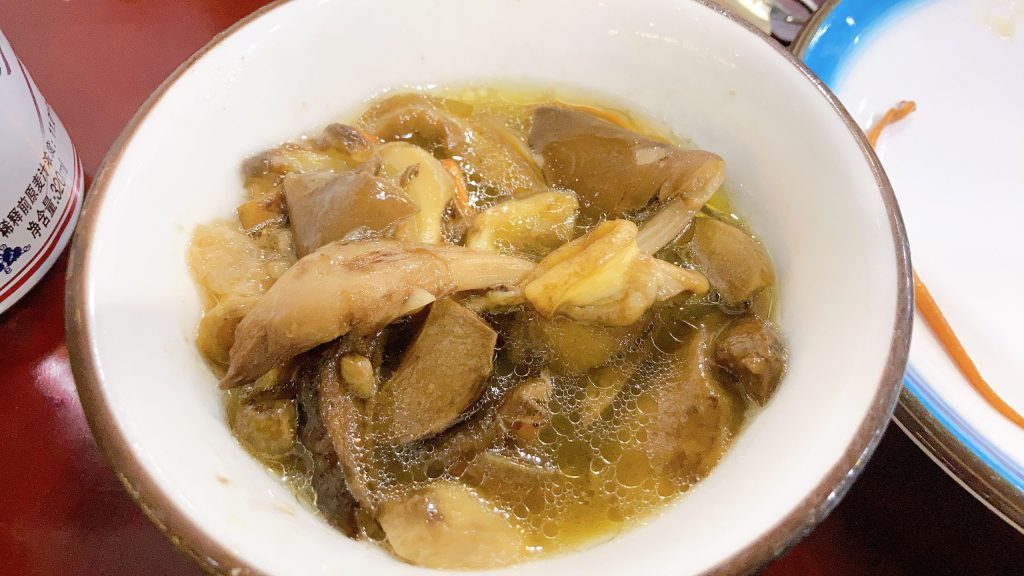
Anyway, time to eat.
Delicious.
The soup was packed with concentrated mushroom umami, and the mushrooms themselves all had different textures. Absolutely incredible.
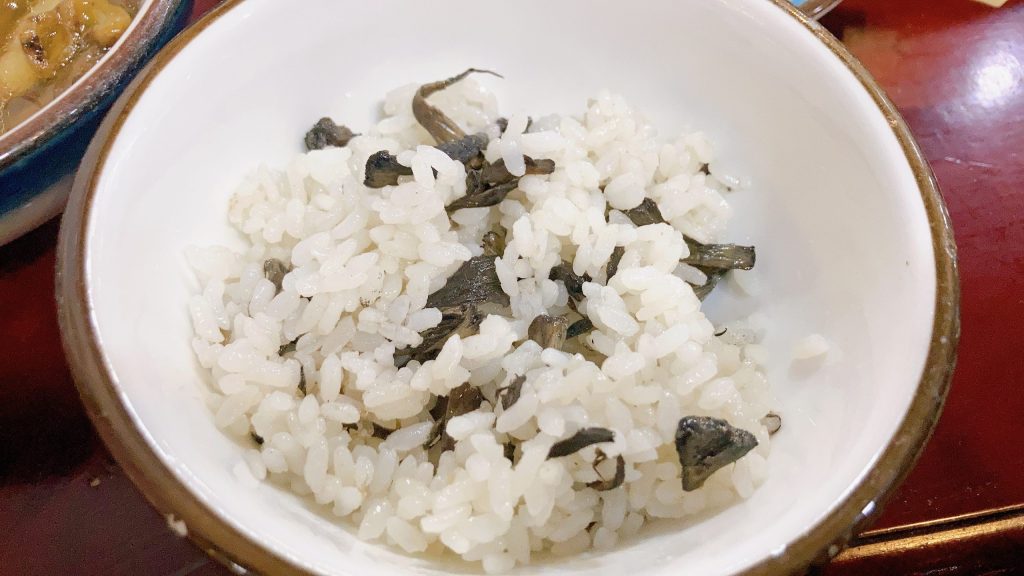
And this mushroom mixed rice—also unbelievably good.
It had a very distinctive mushroom aroma and a richness from the oil mixed into the rice, so it might not be for everyone, but I personally loved it.
I can almost understand why people would risk eating poisonous mushrooms after tasting how good these are.
But still—be patient.
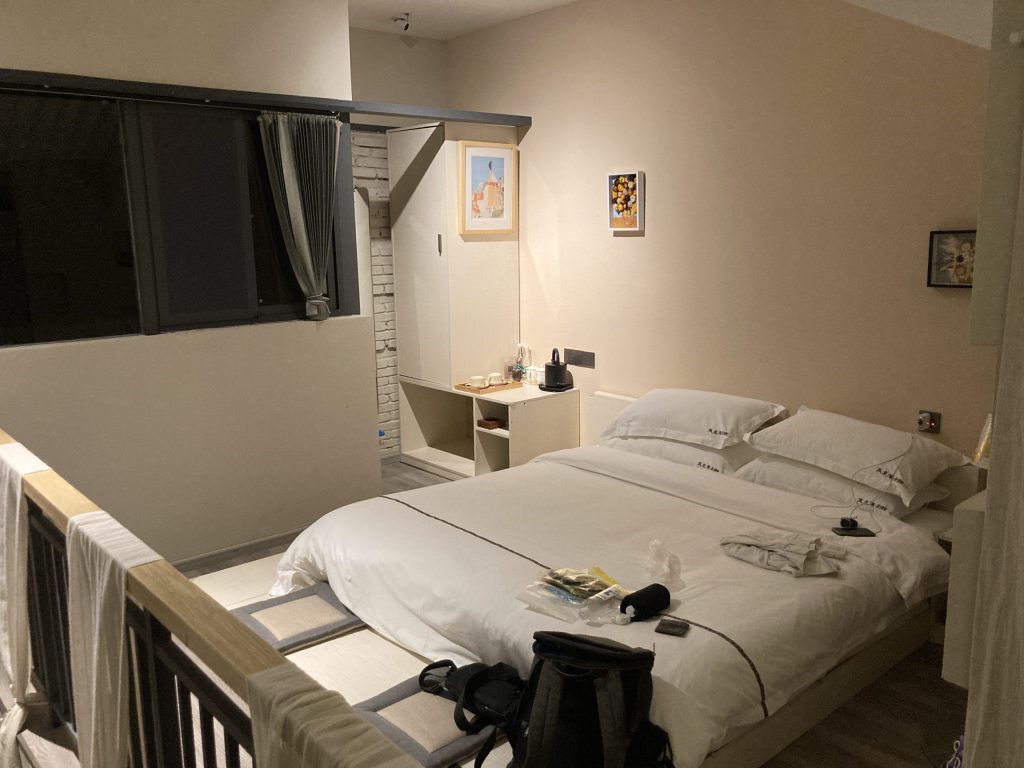
At 10:30 p.m., I arrived at the hotel.
My friend’s father drove me there—in fact, he had been helping me all day.
Thank you very much.
Hotel: Fenglongwan Bieyuan (Dianchi International Convention and Exhibition Center Branch)
Price: 15,000 yen per night
Tomorrow I had to wake up at 5:00 a.m.
Only six hours of sleep…
Good night.
11:00 p.m. — Sleep
August 13 -Guilin: Reed Flute Cave and Luosifen-
5:30 a.m. — Left the hotel
My friend’s father drove me to the station again.
My friend was heading to Chongqing with his family for a trip of their own. Hope they had a great time.
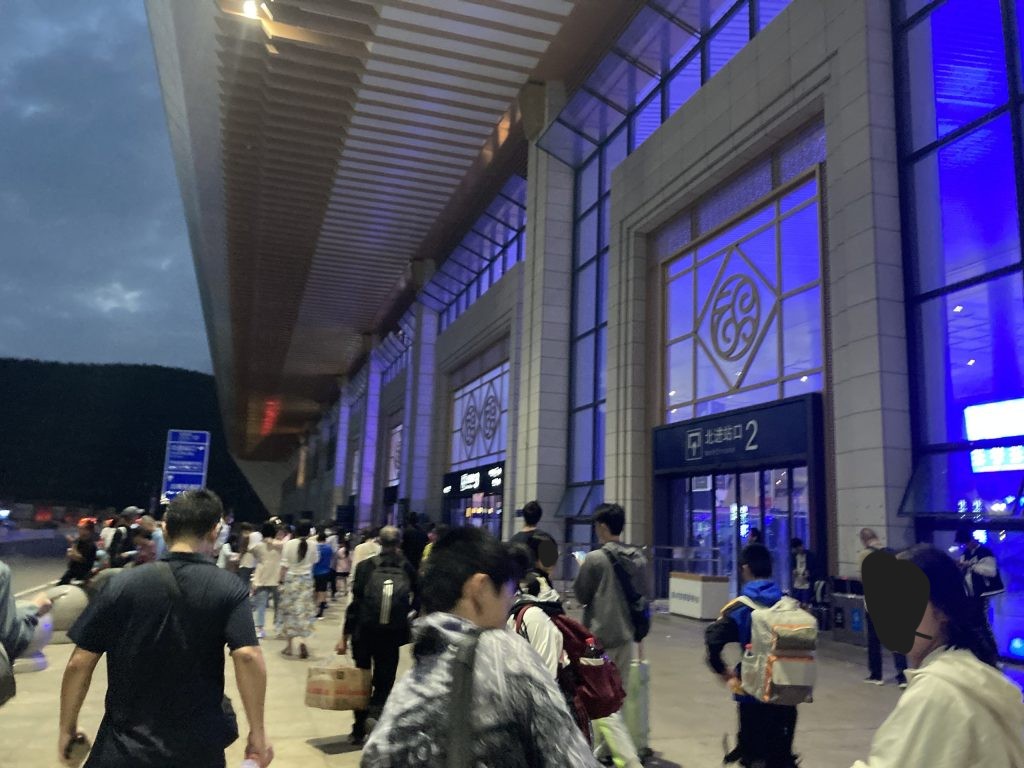
A little after 6:00 a.m. — Arrived at Kunming South Station
Even this early in the morning, the traffic circle outside the station was already packed with cars and total chaos.
That felt very much like China.
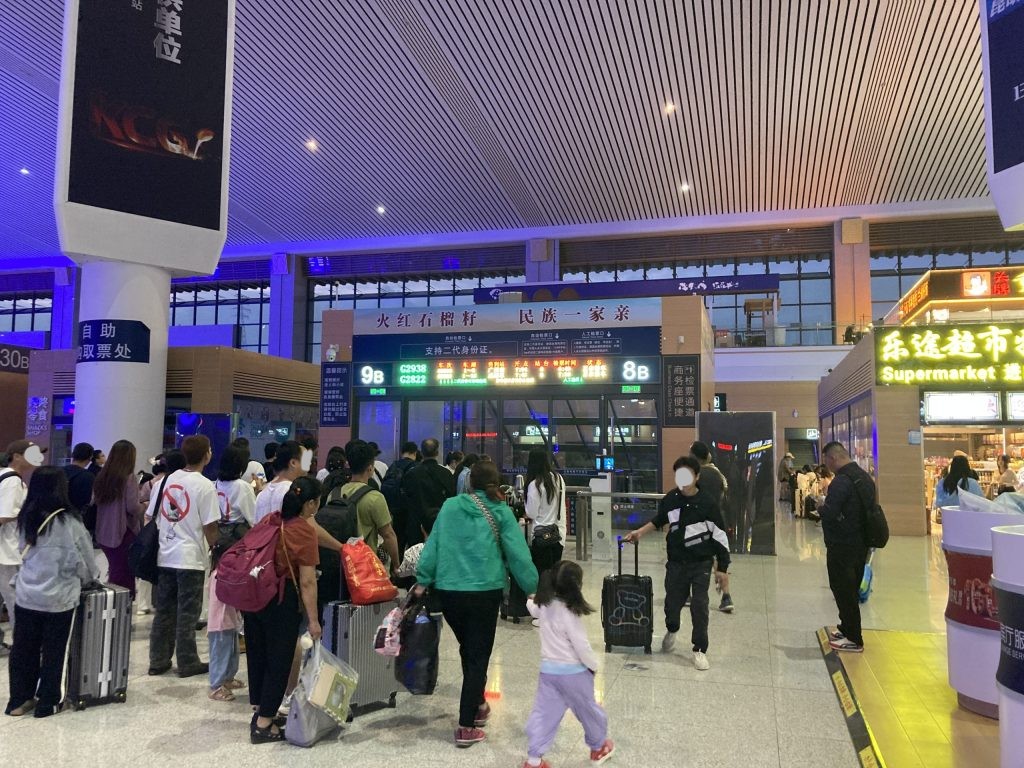
Kunming South Station is basically a high-speed rail station, but it looks almost like an airport.
To enter the station, you need your reservation ticket and passport (or ID card for locals), and you must go through a baggage inspection. Very airport-like.
I had booked an e-ticket in advance on Trip.com, so there was no need to print anything.
From what I had seen online, foreigners supposedly needed to issue a paper ticket at the station, but that turned out to be wrong.
Apparently, the reservation was linked to my passport, so I was able to enter simply by showing it.
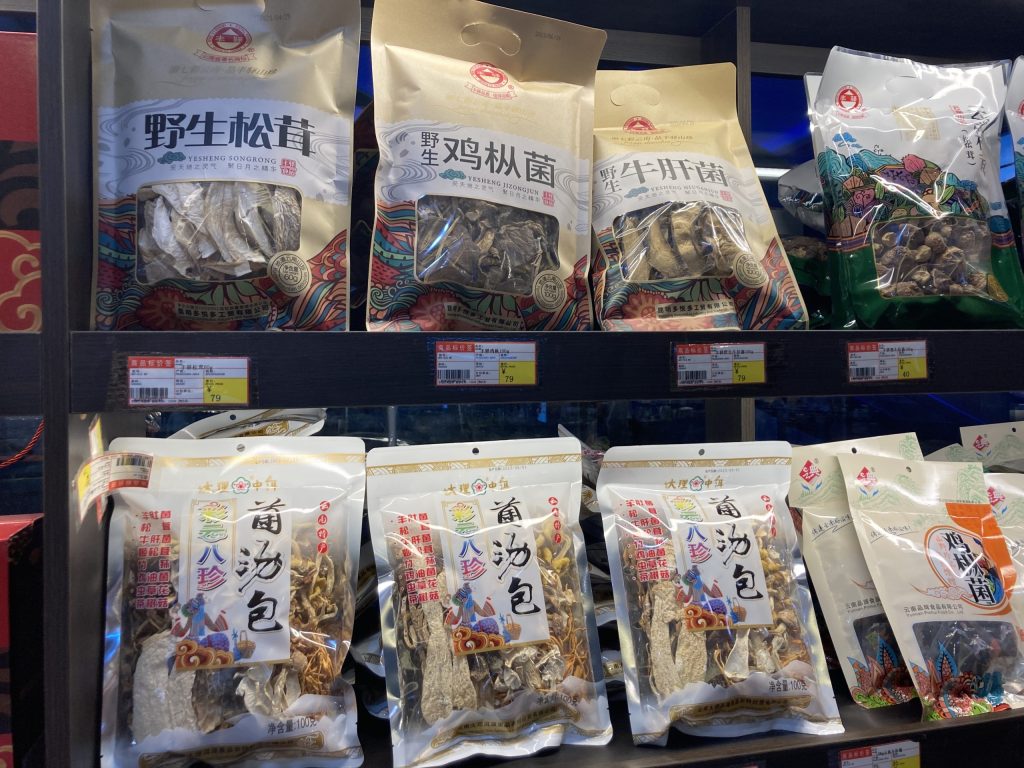
Inside the station there were plenty of restaurants and souvenir shops. Even though it was still in the 5 a.m. hour, several were already open.
I thought I might buy some souvenirs for coworkers, so I looked around a little.
Then a problem came up.
WeChat Pay didn’t work.
Alipay didn’t work either.
Why?
Eventually, the payment only went through when the cashier scanned my QR code instead.
That was stressful, and I never really figured out what the issue was.
This made me realize again that it’s still wise to carry some cash, just in case.
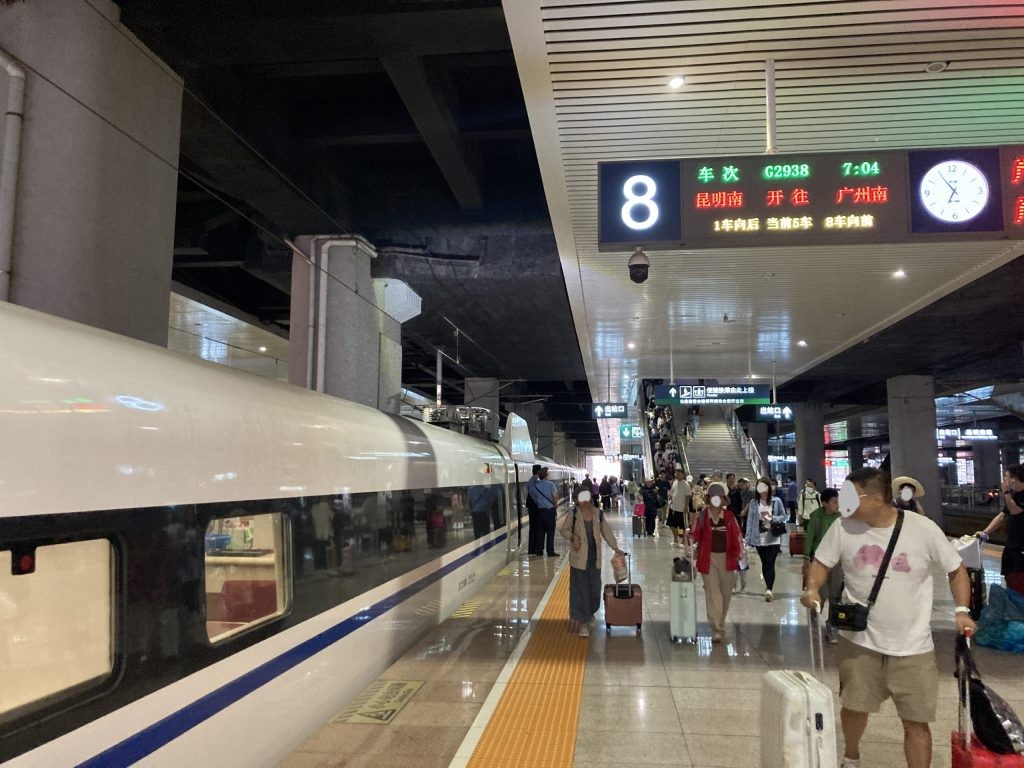
7:00 a.m. — Departed Kunming South
China’s version of the Shinkansen felt wider and more spacious than Japan’s, and very comfortable.
The level of noise and shaking was about the same as Japan’s trains, and overall I honestly felt that China’s high-speed rail might even have the edge.
12:00 p.m. — Arrived at Guilin West Station
Hot.
Unlike Japan’s humid summer, the air felt a little drier, but the sunlight was intense—almost painful. Very tropical.
I had planned to do some research during the train ride, but the internet connection didn’t work, so once I arrived I had to start from scratch figuring out where to go and how to get there.
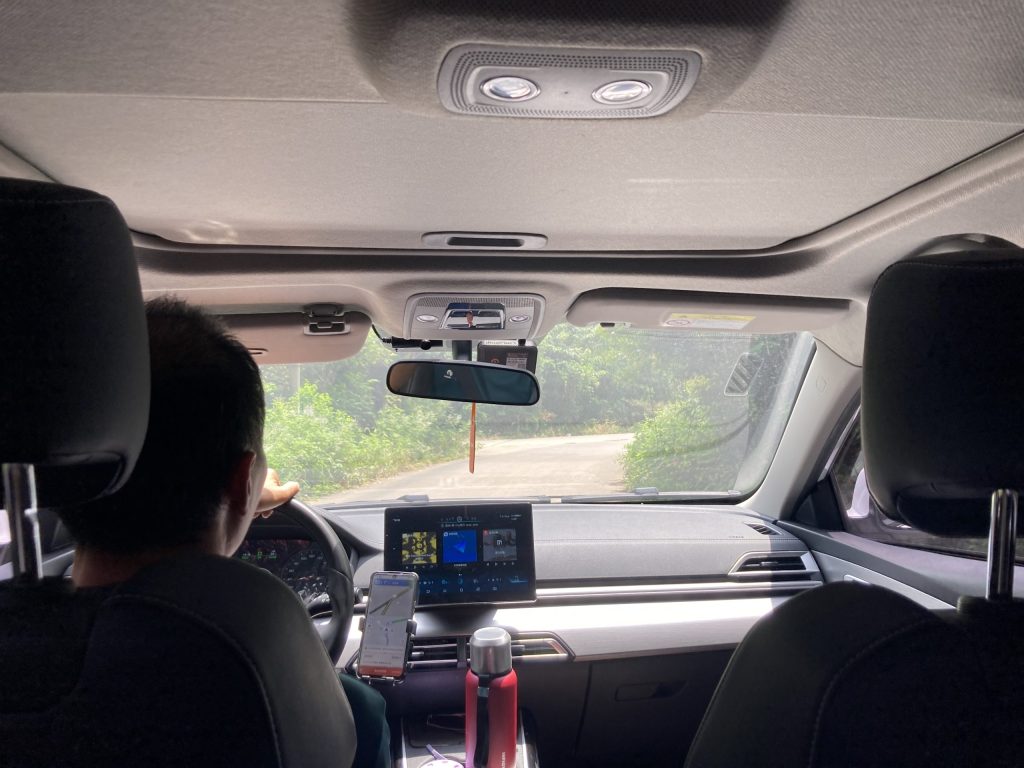
I used the taxi app DiDi (Dīdī, 滴滴), which was very convenient because I didn’t need to explain my destination out loud. Even if you don’t speak Chinese, it works perfectly well.
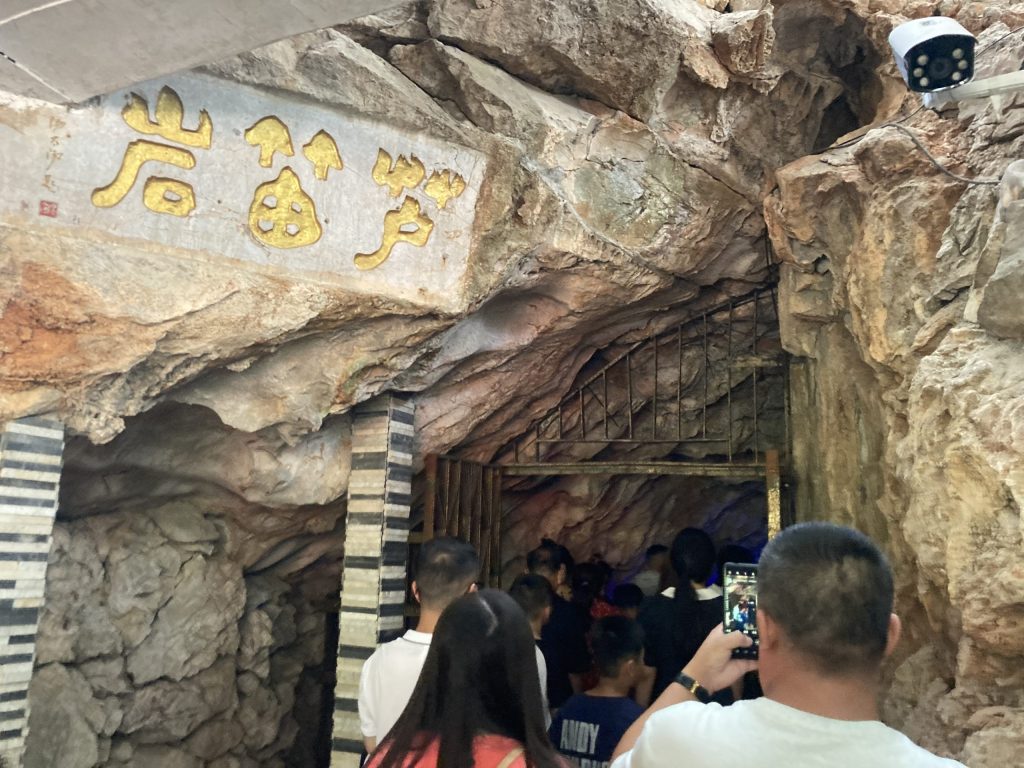
1:30 p.m. — Arrived at Reed Flute Cave
Reed Flute Cave is the largest limestone cave in Guilin.
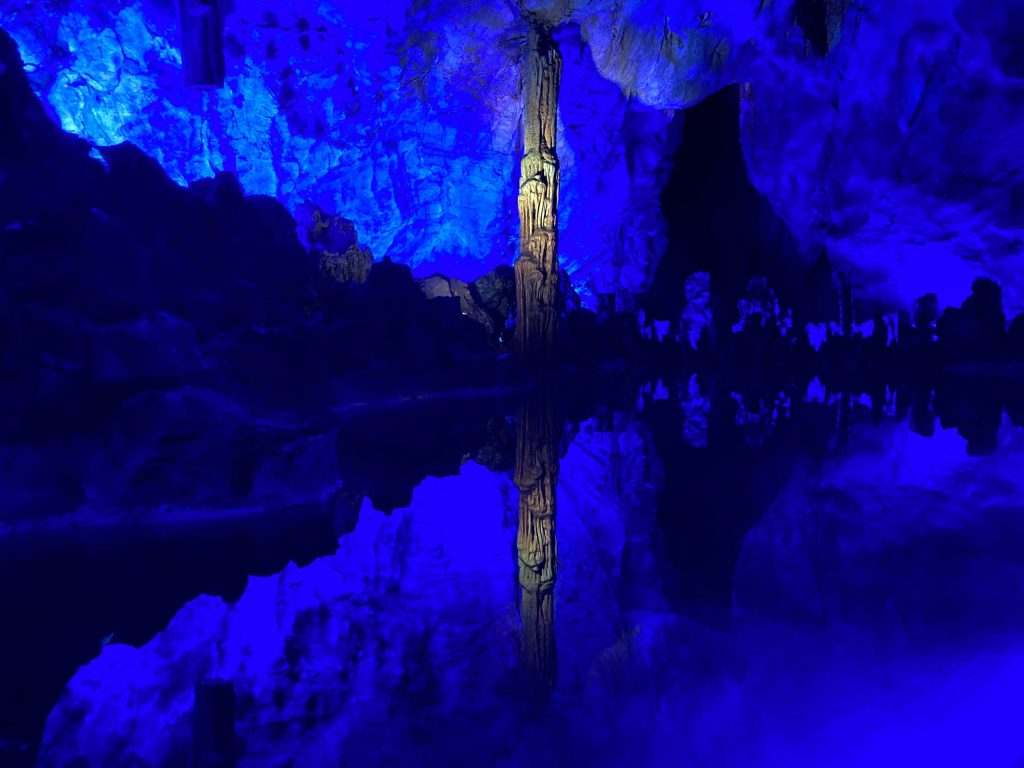
Inside, it was lit up with a kind of dramatic Chinese flair. Surprisingly beautiful.
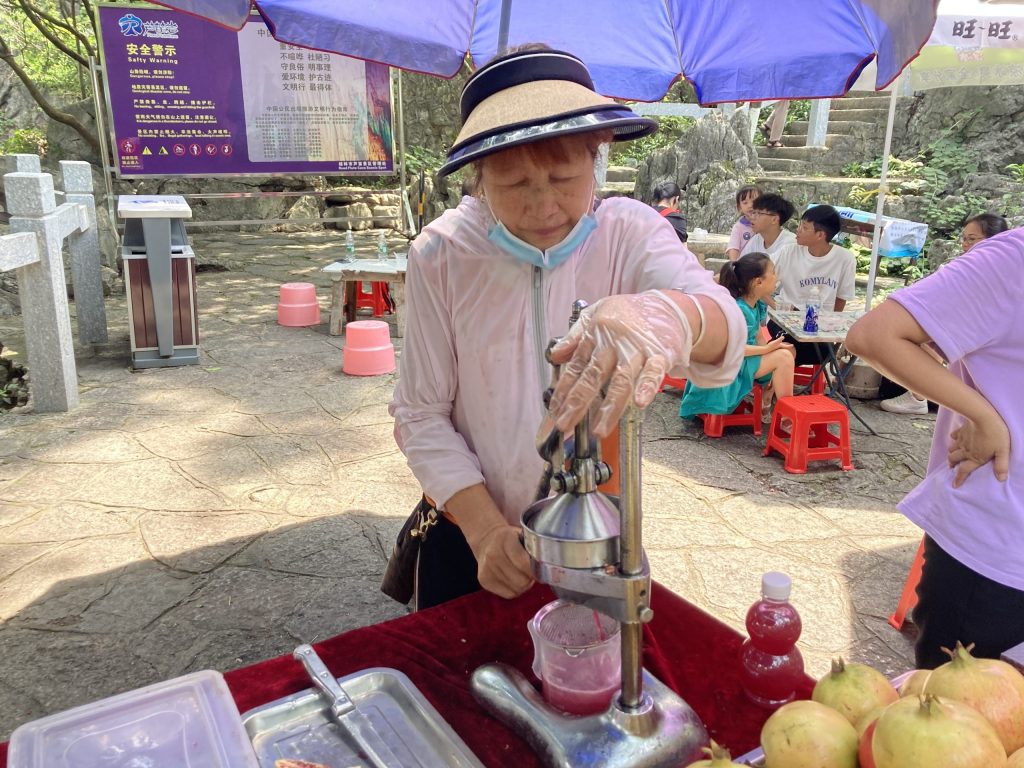
At the exit there were food stalls, and I bought a pomegranate juice there.
And yes, even these tiny stalls accepted only QR code payment. If anything, places like this felt even less likely to accept cash at all.
3:00 p.m. — Left Reed Flute Cave
I used DiDi again and headed to my accommodation in central Guilin.
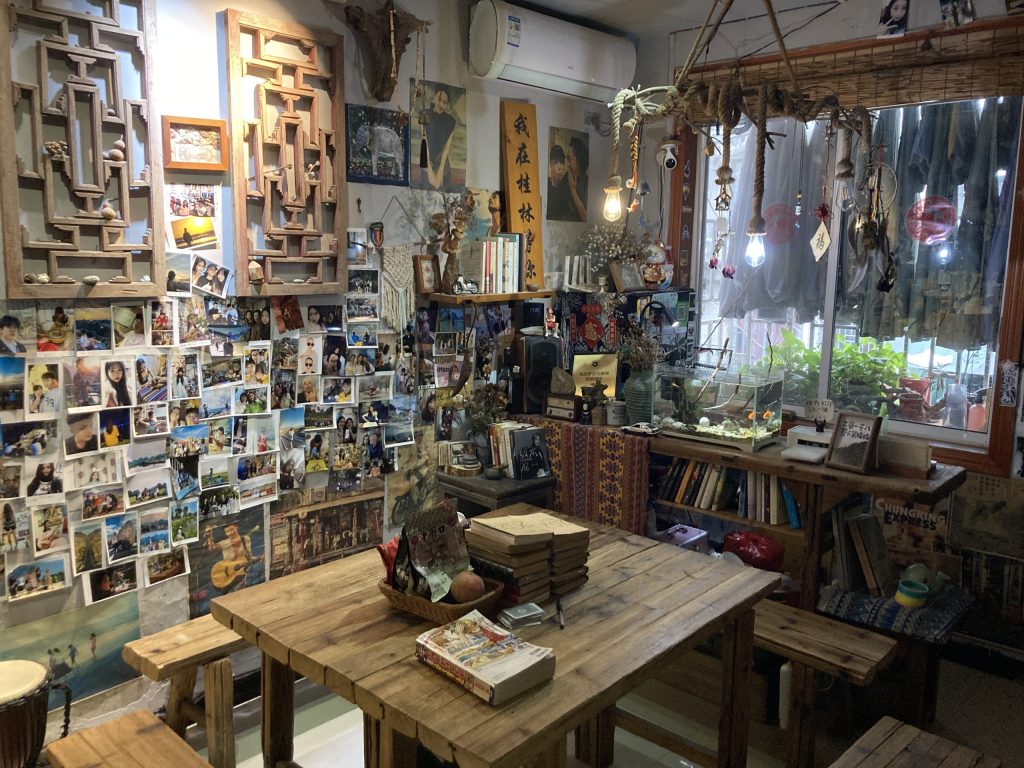
3:30 p.m. — Arrived at the hostel
Hostel: Wo Zai Guilin Deng Ni Youth Hostel (Liangjiang Sihu Dongxixiang)
At the exchange rate back then, it cost only 838 yen per night, unbelievably cheap.
It was a very small hostel with two shared rooms, each with two bunk beds for four people total, and one shared shower and one shared laundry area in the building.
4:00 p.m. — Walk around Guilin + dinner
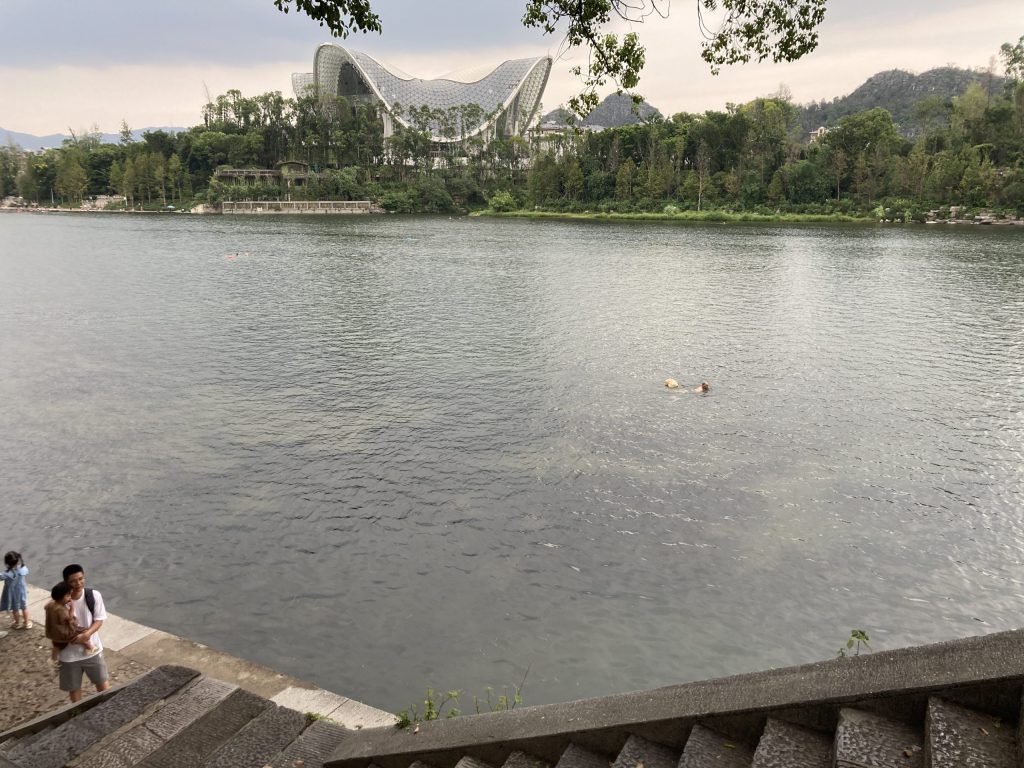
I saw people swimming in the river.
At first I thought, “Wow, swimming right in the middle of a busy riverside area in town—that’s bold.”
But when I looked more closely, there were actually lots of people swimming.
That ability to relax and make oneself at home almost anywhere felt very characteristically Chinese.
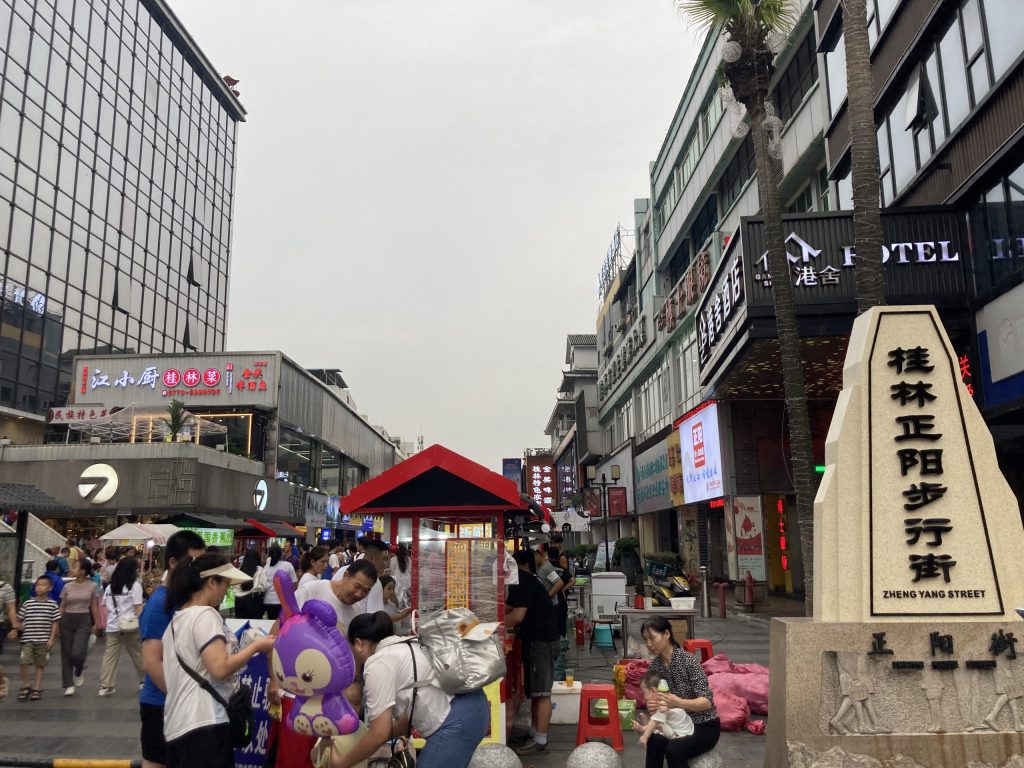
As I kept wandering, I eventually reached Guilin Zhengyang Pedestrian Street. I thought I’d stroll around a bit more and find something to eat nearby.
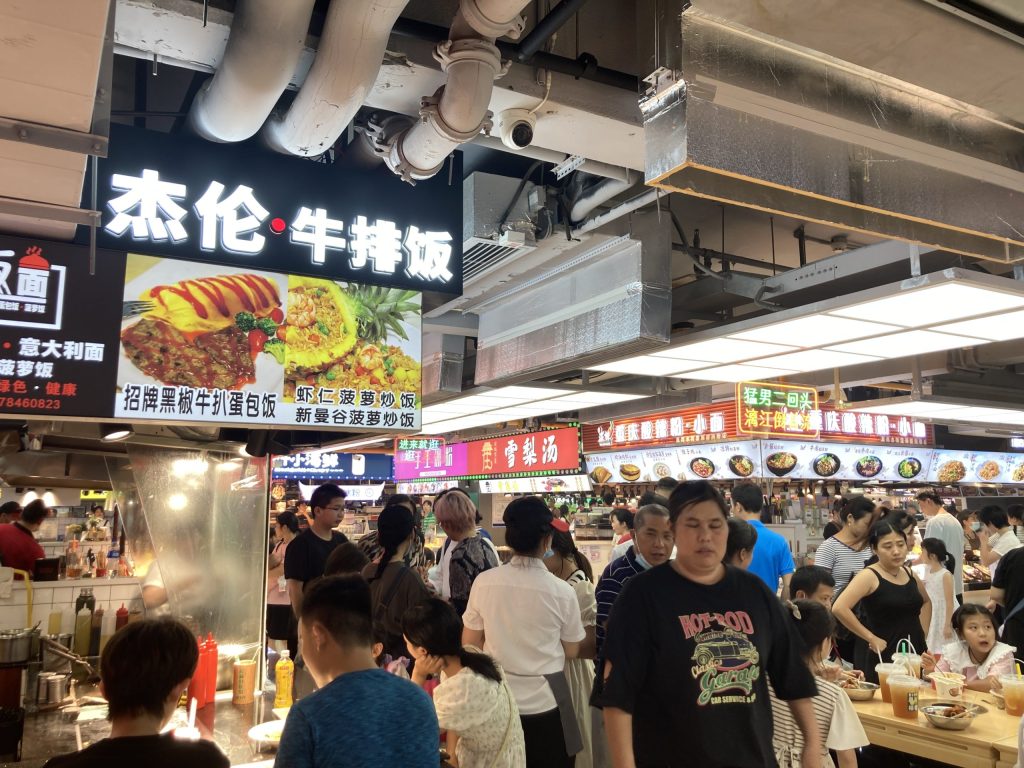
Soon I came across something like a huge food court.
And that’s where I had dinner.
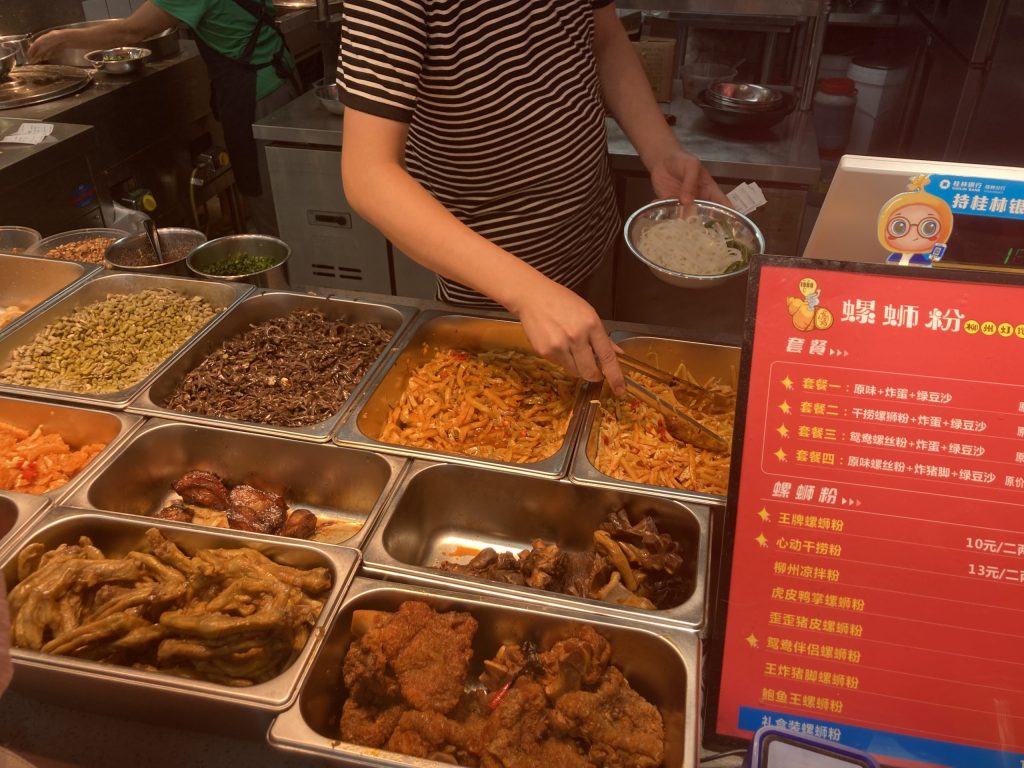
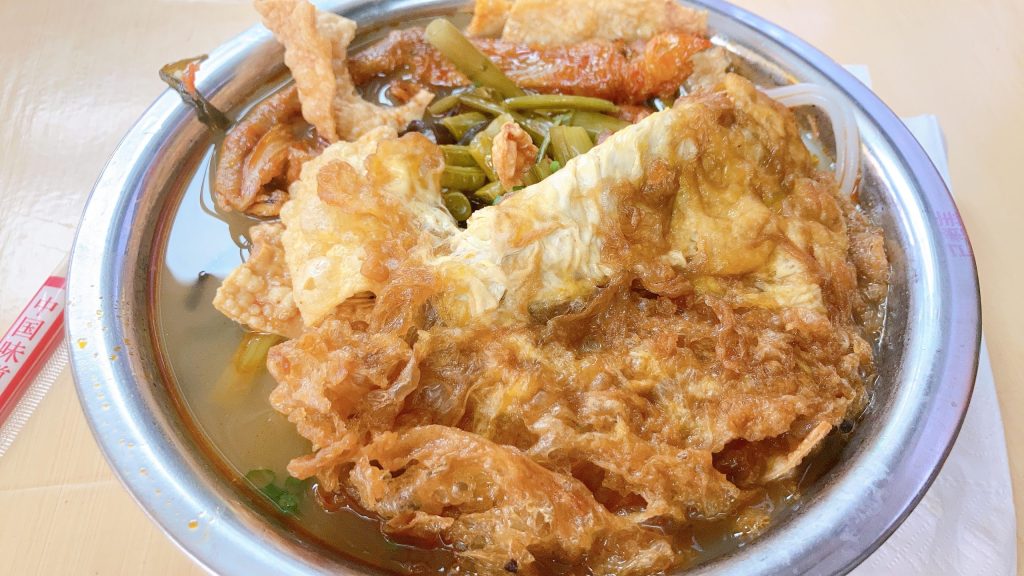
I found a stall selling Luosifen (Luósīfěn, 螺蛳粉), a local dish from around Guilin that I had briefly read about in a guidebook.
Luosifen is a noodle dish made with rice noodles, various toppings, and a sour, spicy broth.
I carefully watched how the people in front of me ordered, then finally gave it a try myself.
Apparently, you choose either “spicy” or “not spicy.”
Naturally, I chose not spicy.
It was insanely spicy.
Why?!
Still, it was delicious.
Overall, it reminded me a little of cold noodles.
The broth was very sour—seriously sour—and also quite spicy from the chili.
Those two strong flavors seemed to crash into each other, and somehow that created a strange harmony.
Very good.
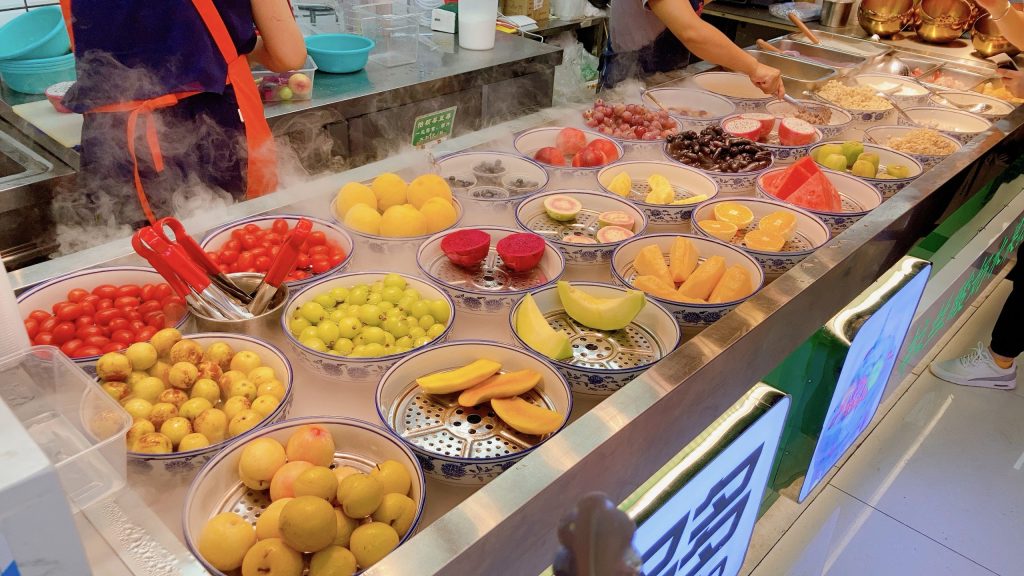
After the meal, I stayed in the food court a bit longer and looked for dessert.
There was a stall with all kinds of colorful fruit, so I bought some cut fruit.
Since this was southern China, there were so many different fruits on display that it was fun just to look at them.
And compared to Japan, they were incredibly cheap, which was a nice bonus.
6:00 p.m. — Walk around Guilin
8:00 p.m. — Returned to the guesthouse
11:00 p.m. — Sleep
August 14 -Yangshuo: Li River Cruise and West Street-
The main event of the day was the Li River Cruise (Líjiāng yóu, 漓江游).
From Guilin to Yangshuo, you travel down the river by sightseeing boat over about four hours.
7:00 a.m. — Left Guilin
I took a DiDi from central Guilin to Zhujiang Pier, the departure point for the cruise.
8:30 a.m. — Arrived at Zhujiang Pier
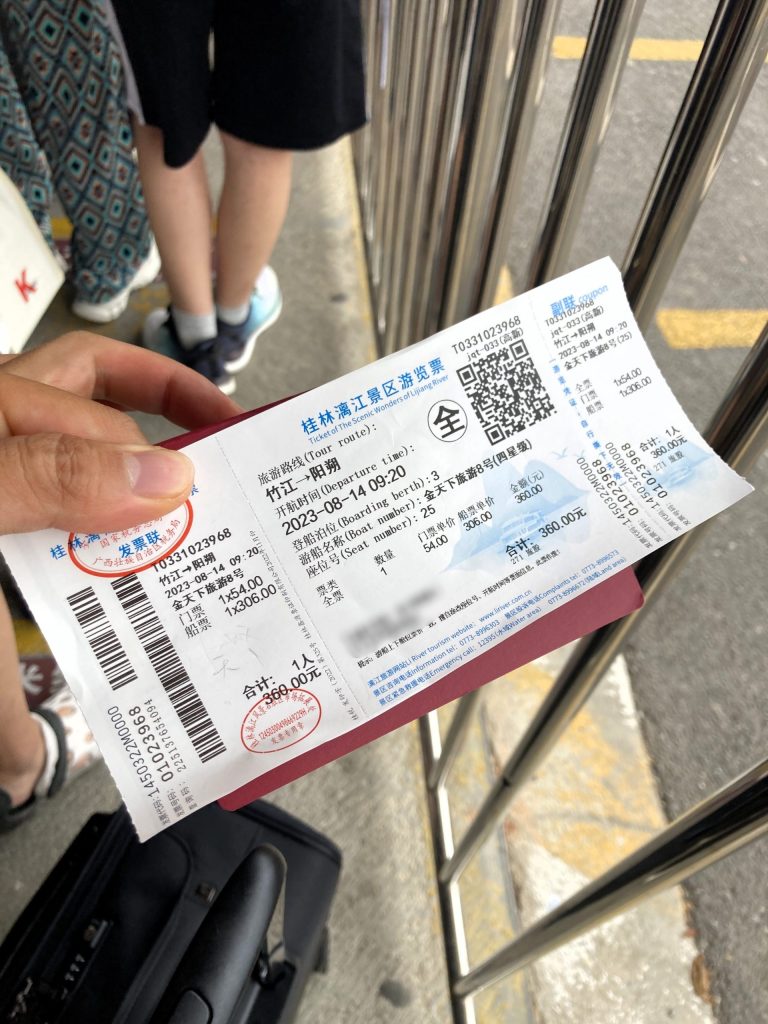
At reception, I showed the confirmation email for my reservation and received my ticket.
A passport was required here as well.
I didn’t check whether same-day tickets were available, but even if they are, booking in advance is definitely the safer option. The crowds were intense.
I booked through VELTRA, and the ticket cost 360 yuan (about 7,200 yen).
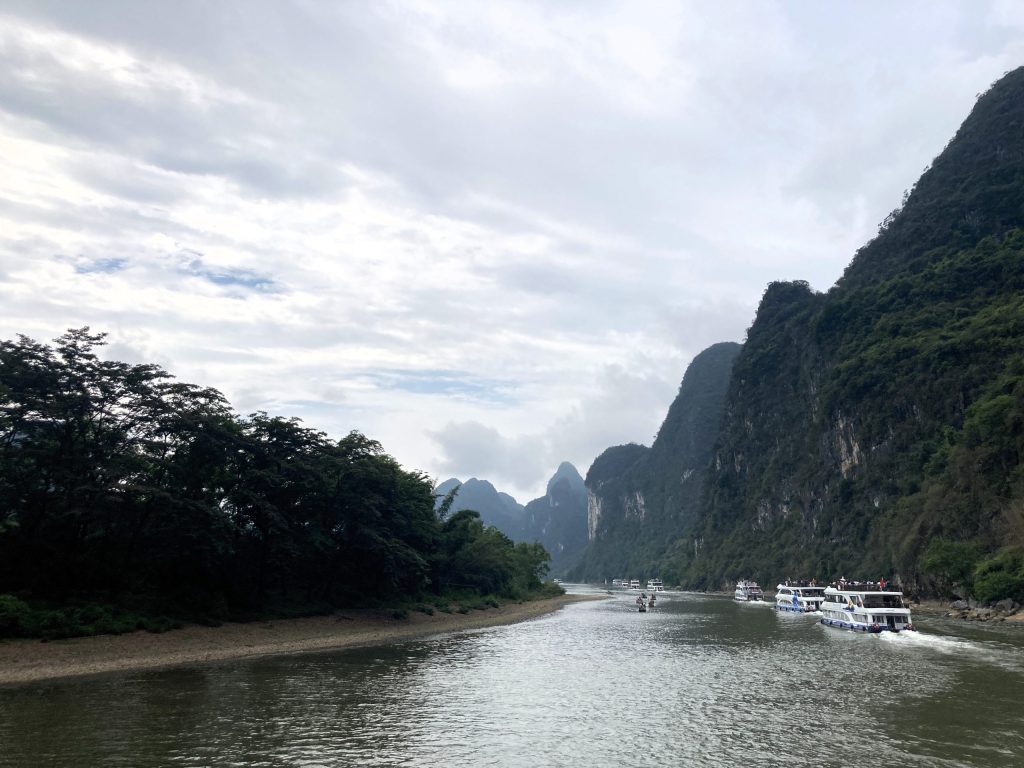
9:00 a.m. — Departure
I boarded one of the sightseeing boats lined up along the pier.
There also seemed to be options for rafts and canoes if you wanted a different kind of experience.
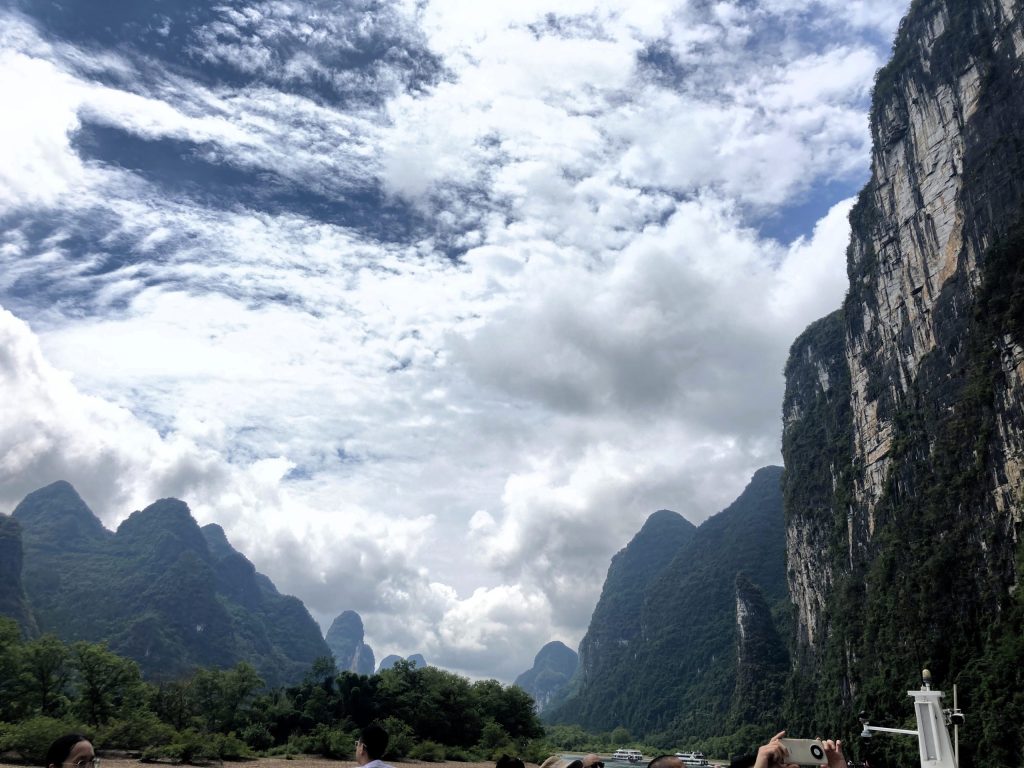
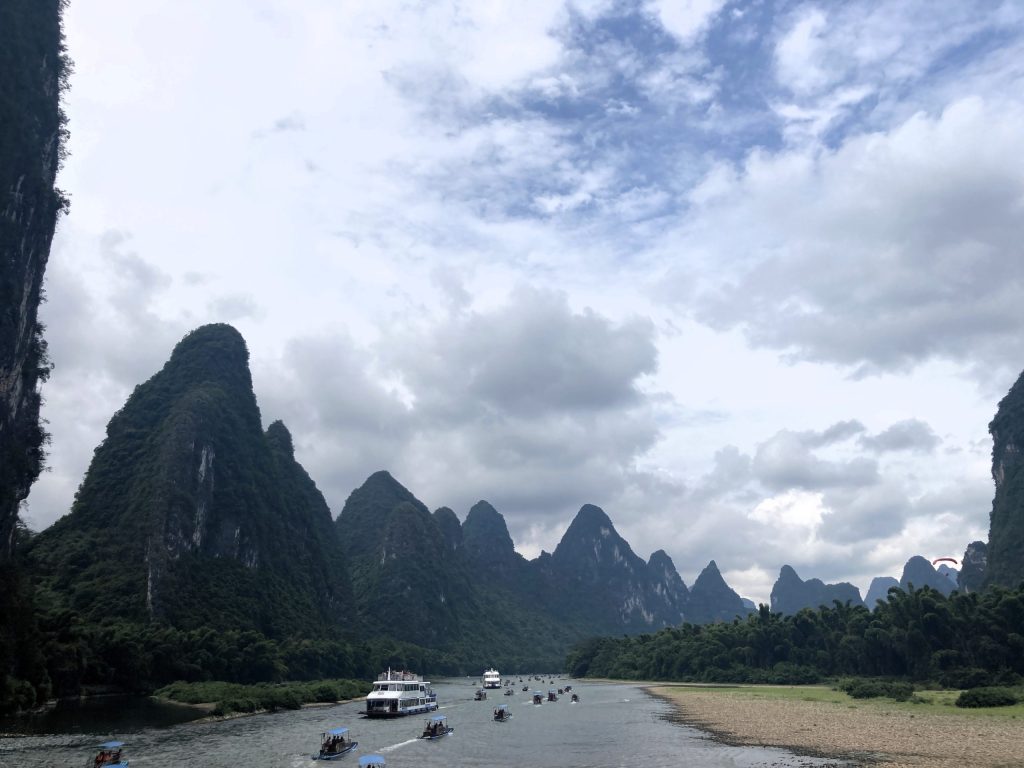
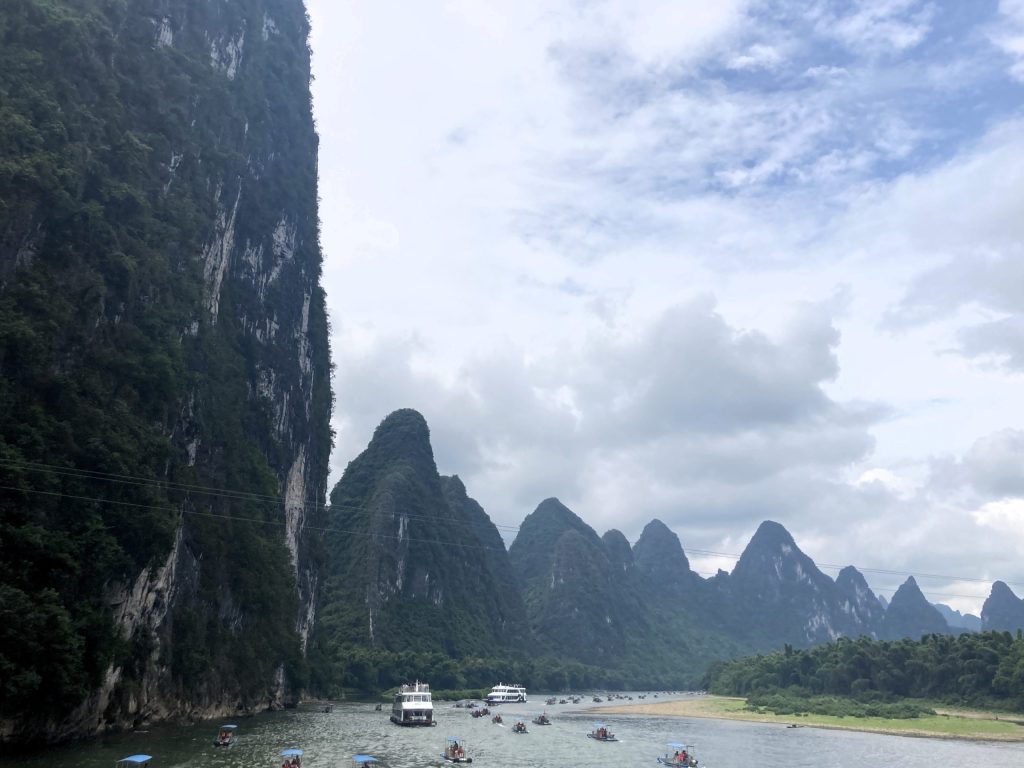
This was what I had come to see.
It was a place I had dreamed of visiting for a long time.
And it was far more beautiful than I had imagined.
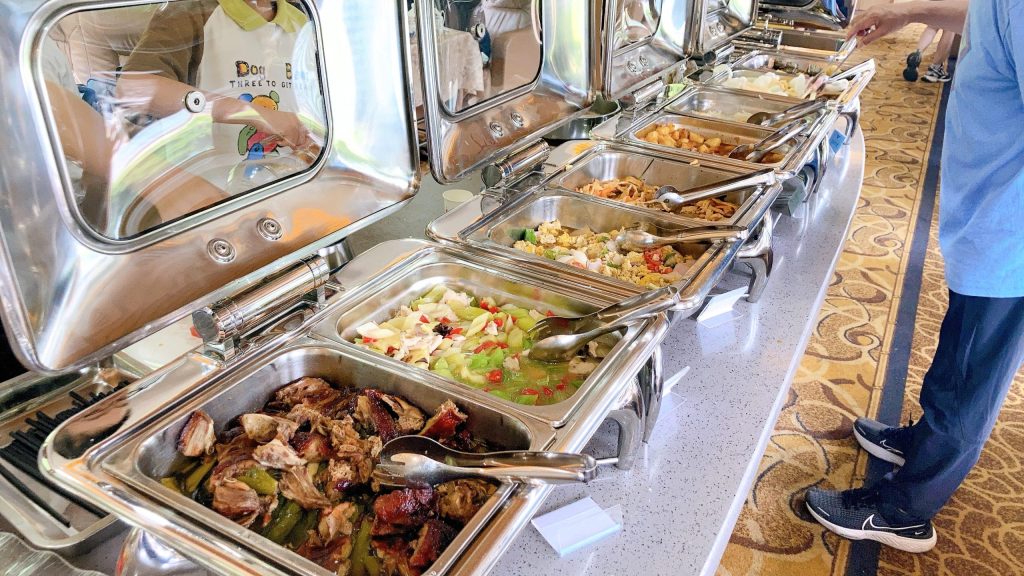
There was a buffet on board, which I had for lunch.
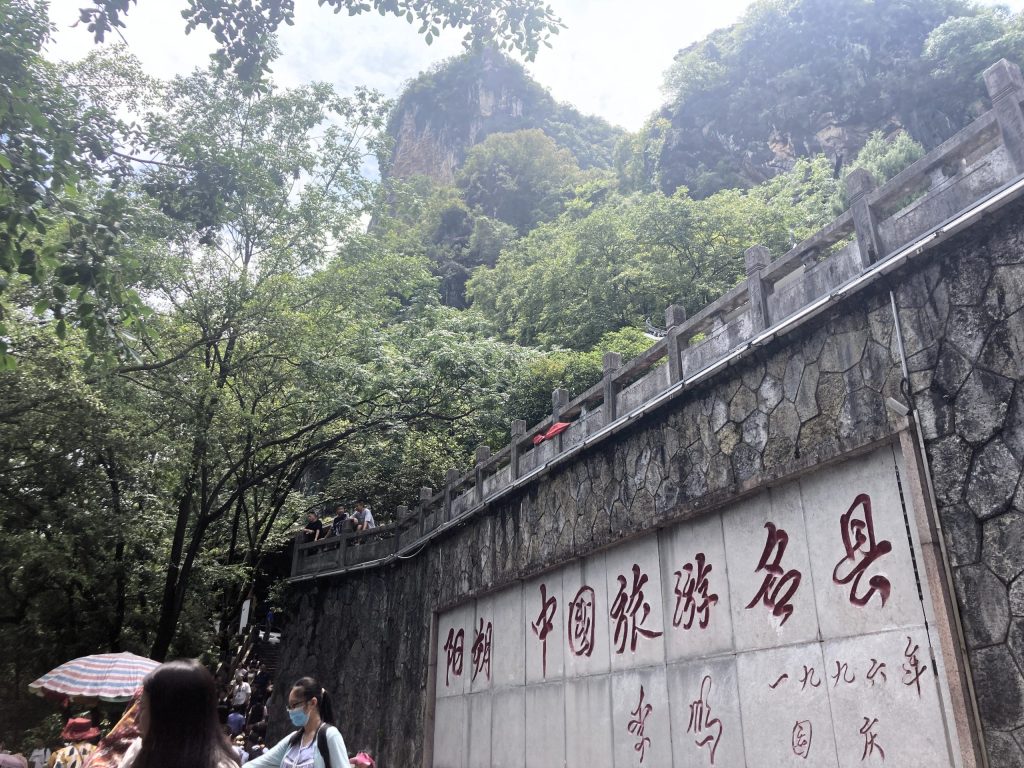
1:00 p.m. — Arrived in Yangshuo
After an amazing four-hour boat journey, I arrived in Yangshuo.
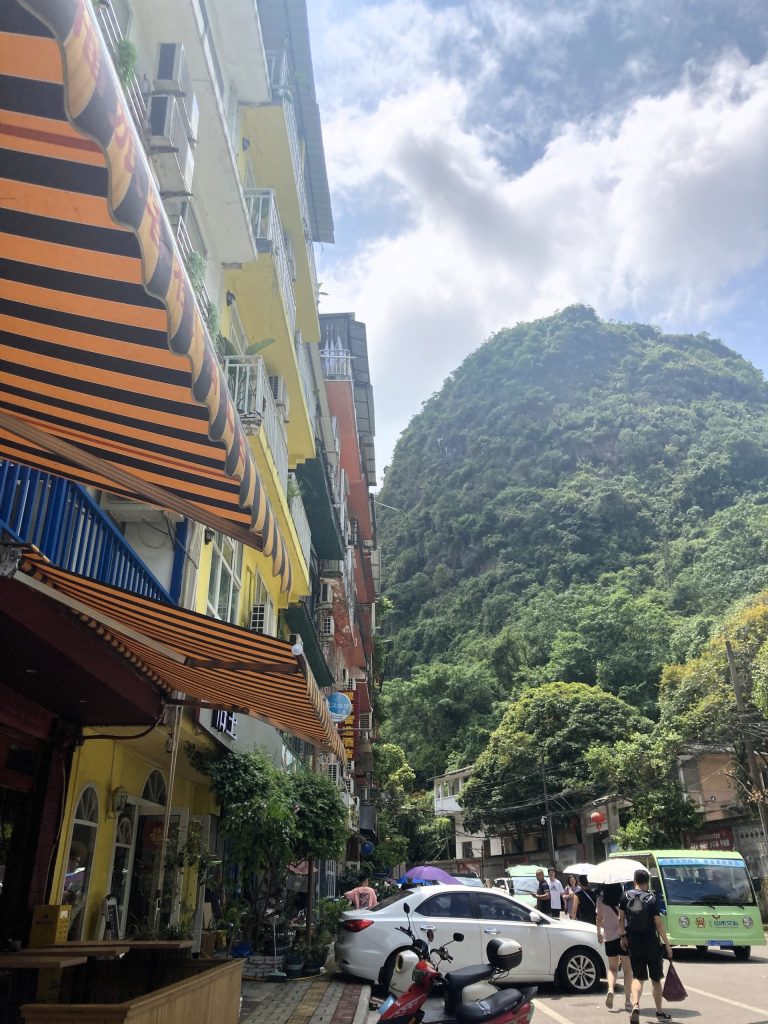
2:00 p.m. — Arrived at the hotel
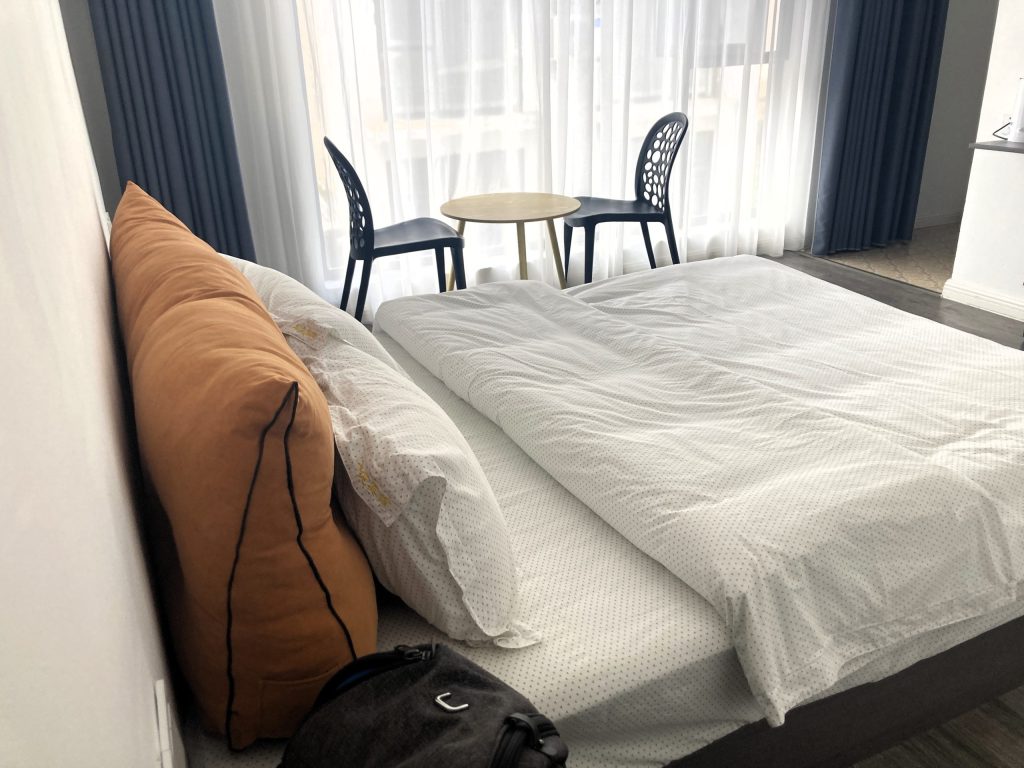
Hotel: Shuofeng Guesthouse (Yangshuo West Street Branch)
Price: 6,000 yen
The staff spoke English, which made communication easy.
The room felt spacious enough for even two people and was clean and comfortable.
It was about a 15-minute walk from the center of town, but the scenery—Yangshuo’s streets with the karst mountains rising behind them—was so beautiful that I actually felt this distance was just right.
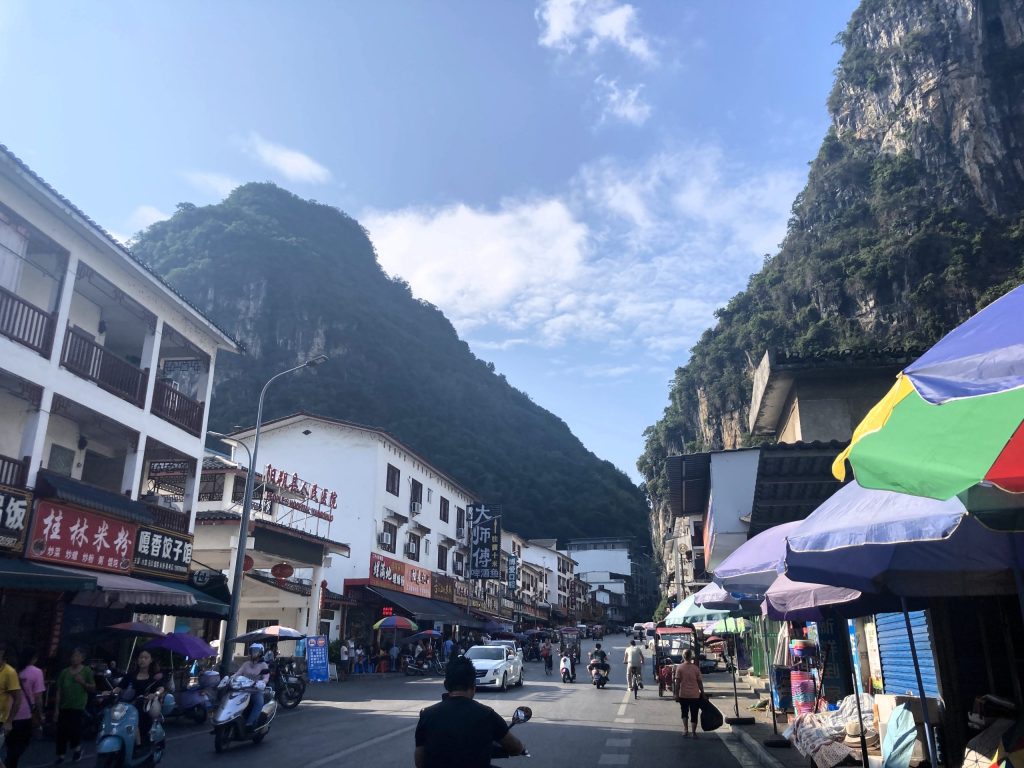
3:00 p.m. — Walk around Yangshuo
I headed toward West Street (Xījiē, 西街), one of Yangshuo’s main tourist spots, taking my time to wander along the way.
It reminded me a little of a famous hot spring town in Japan—full of domestic tourists and lively energy.
The karst mountains were always in the background no matter where I looked, and the landscape was strikingly beautiful.
It even reminded me of a Studio Ghibli film.
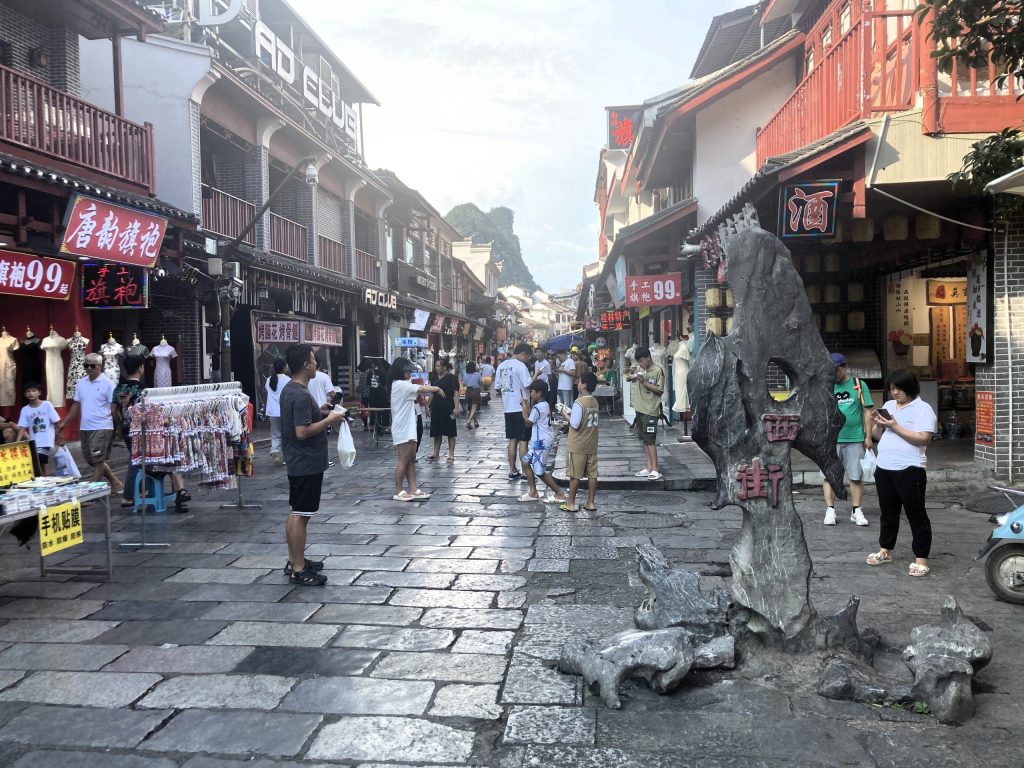
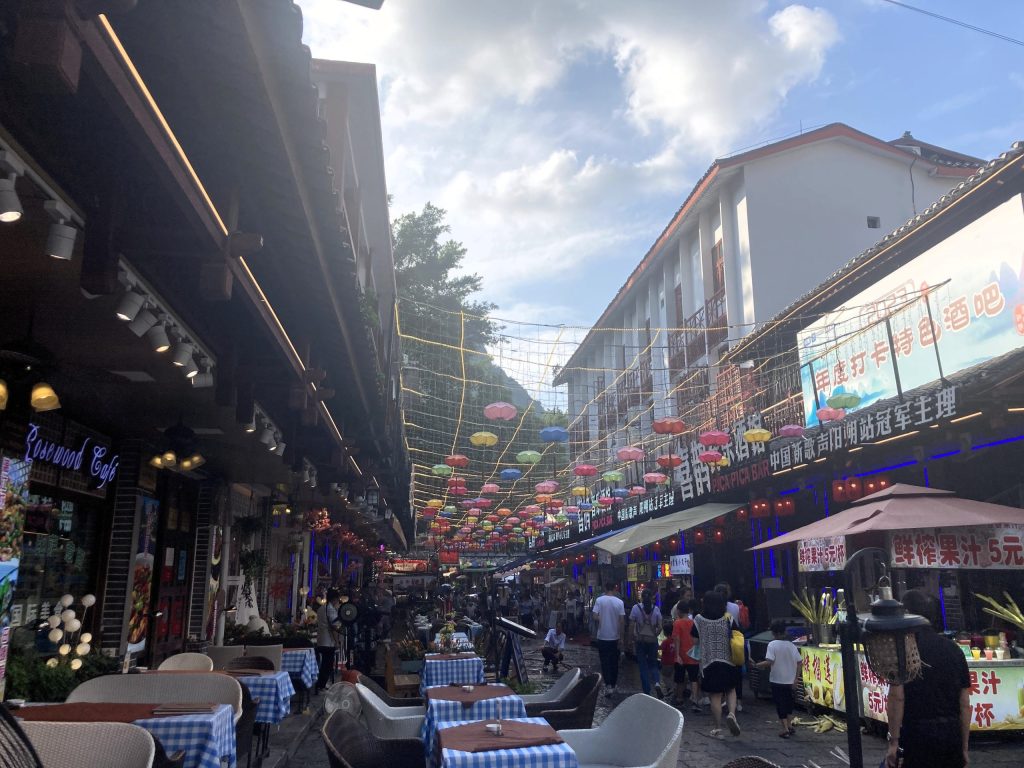
4:00 p.m. — Strolling through West Street
This was the liveliest area, full of places for street food and sightseeing.
It had that classic tourist-destination atmosphere, and for once I even spotted a few English signs here and there.
At the time, this was still soon after the COVID reopening and a tourist visa was required, so I hardly saw any foreign visitors, but under normal circumstances I imagine there would be plenty.
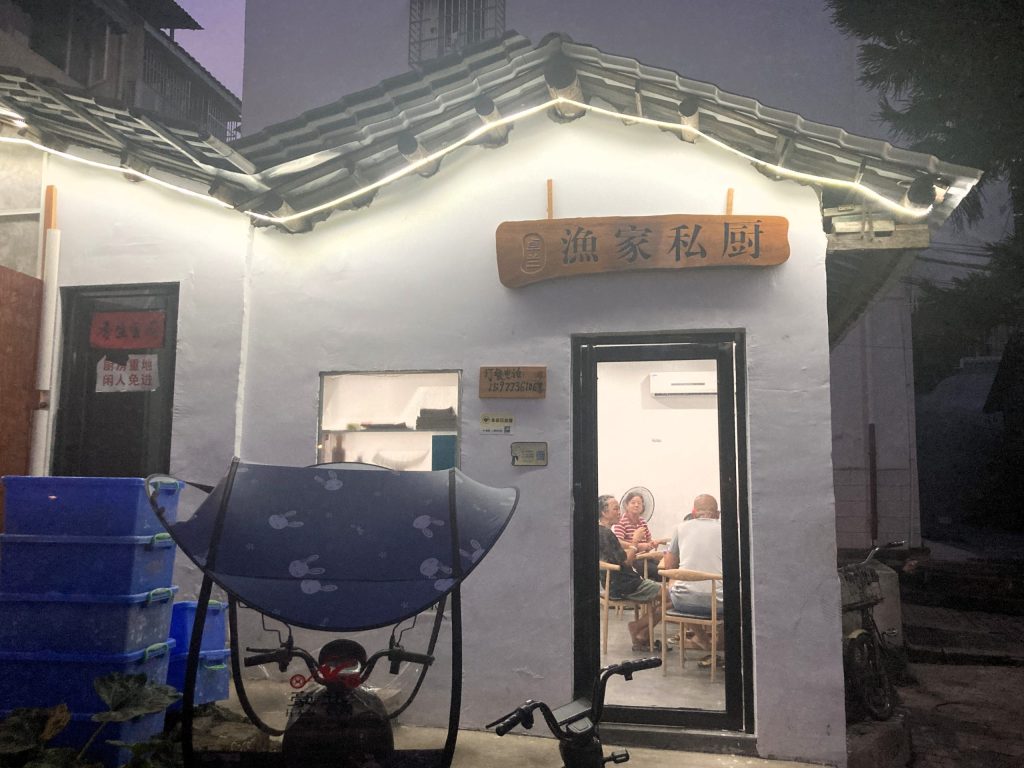
5:00 p.m. — Dinner
I had dinner at a restaurant recommended by the hotel staff.
Restaurant: Yujia Sichu
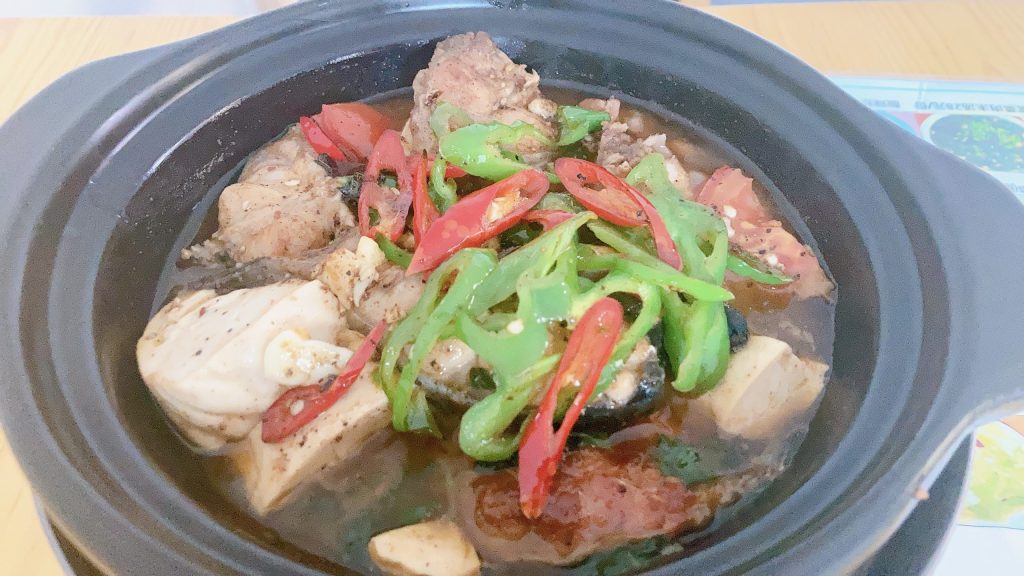
I’ve forgotten the exact dish names and prices, but this was the single best meal of the entire trip.
Everything I ate in China was good, but this place was on another level.
The fish was especially incredible—its flavor was so rich and memorable.
The person running the restaurant could speak Japanese. Apparently, he used to work at an airport.
Then yet another payment issue happened.
The QR payment wouldn’t go through.
It seemed to be some kind of security issue on the Mitsui Sumitomo credit card side.
For almost an hour I struggled with the authentication process, and somehow, eventually, it worked.
Even then, I never really figured out what caused the problem or how exactly it got resolved.
So it remained a bit frustrating.
10:00 p.m. — Sleep
August 15 -Shenzhen: Dafen Oil Painting Village and Ping An Finance Center-
6:00 a.m. — Wake up
Today I took the high-speed rail again, this time to Shenzhen.
The main destination was Dafen Oil Painting Village (Dàfēn Yóuhuà Cūn), a district known for its concentration of painters and galleries. I’d heard you could see countless paintings there, so I wanted to find some favorites.
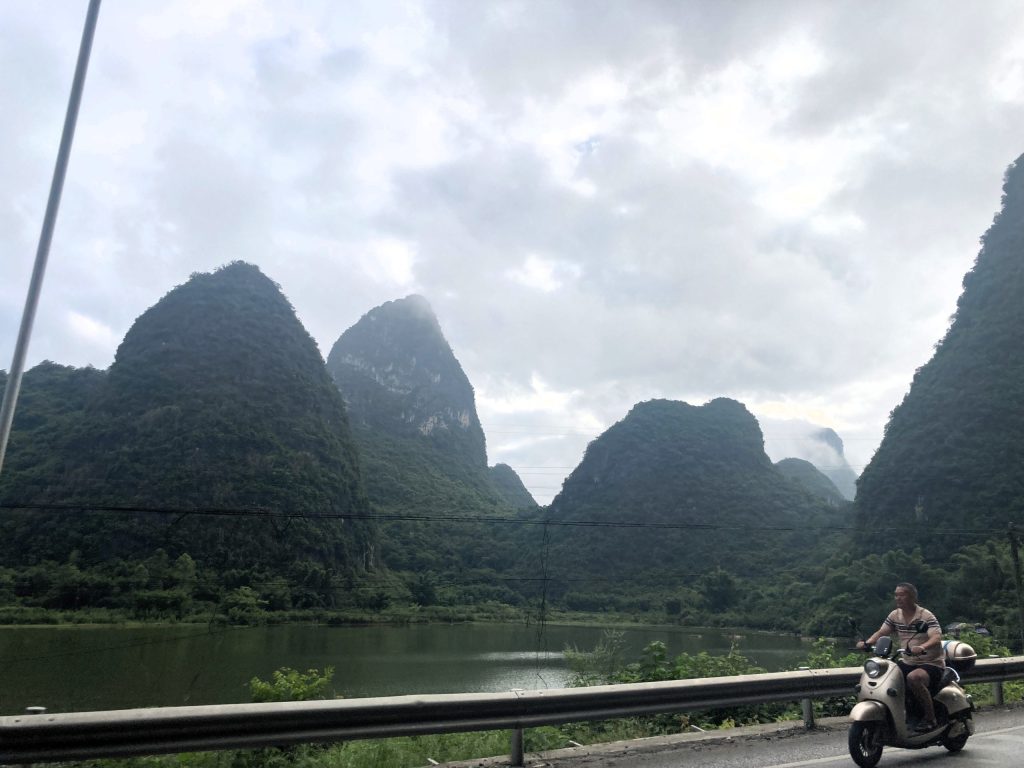
7:00 a.m. — Departed
I took a taxi via DiDi and set off for Yangshuo Station, about one hour away.
The entire drive was filled with karst scenery.
And somehow, no matter how much of it I saw, I never got tired of it.
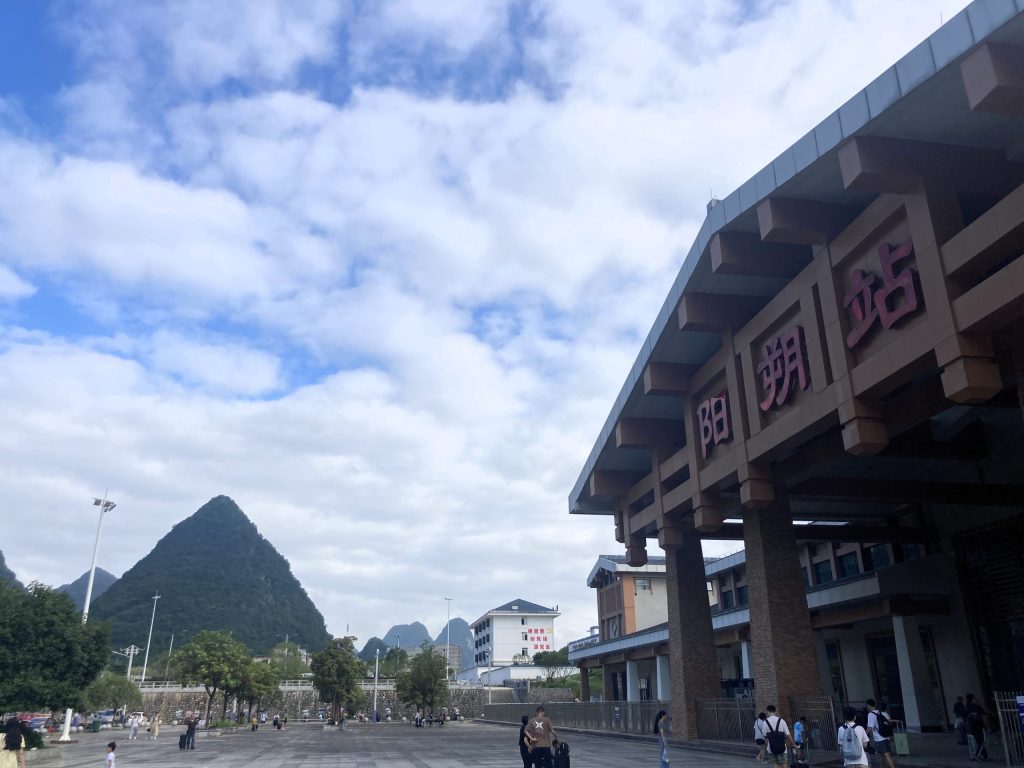
8:00 a.m. — Arrived at Yangshuo Station
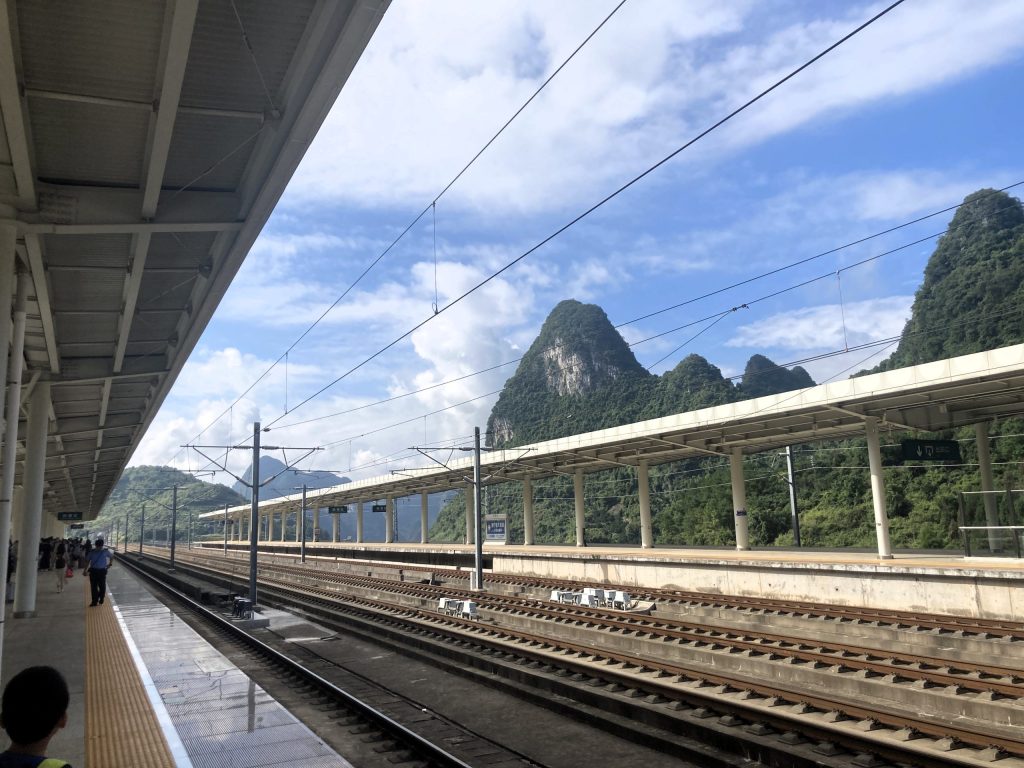
9:00 a.m. — Departure
Even during the train ride, the karst landscapes seemed to go on forever.
China’s overwhelming sense of scale never failed to impress me.
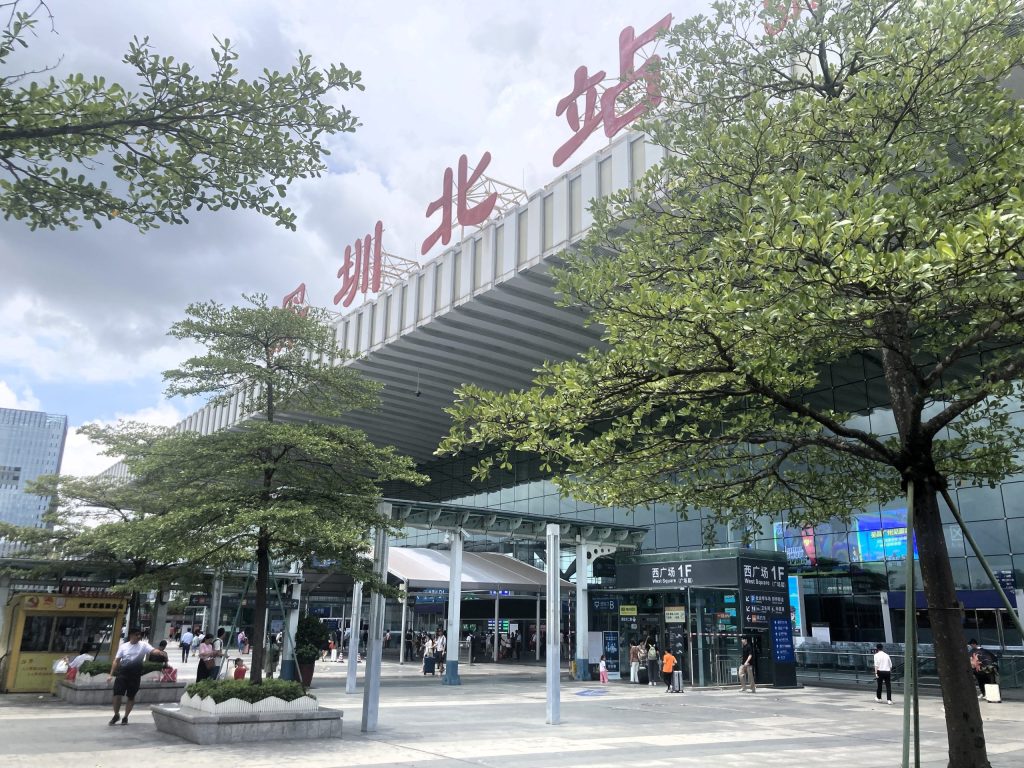
12:00 p.m. — Arrived at Shenzhen North Station
I tried to call another DiDi taxi, but the area was packed with cars and the roads were layered and confusing, making pickup difficult.
So instead, I used one of the unofficial taxis waiting around the station for tourists.
The fare wasn’t outrageously expensive or anything, so in the end I felt that was probably the right choice.
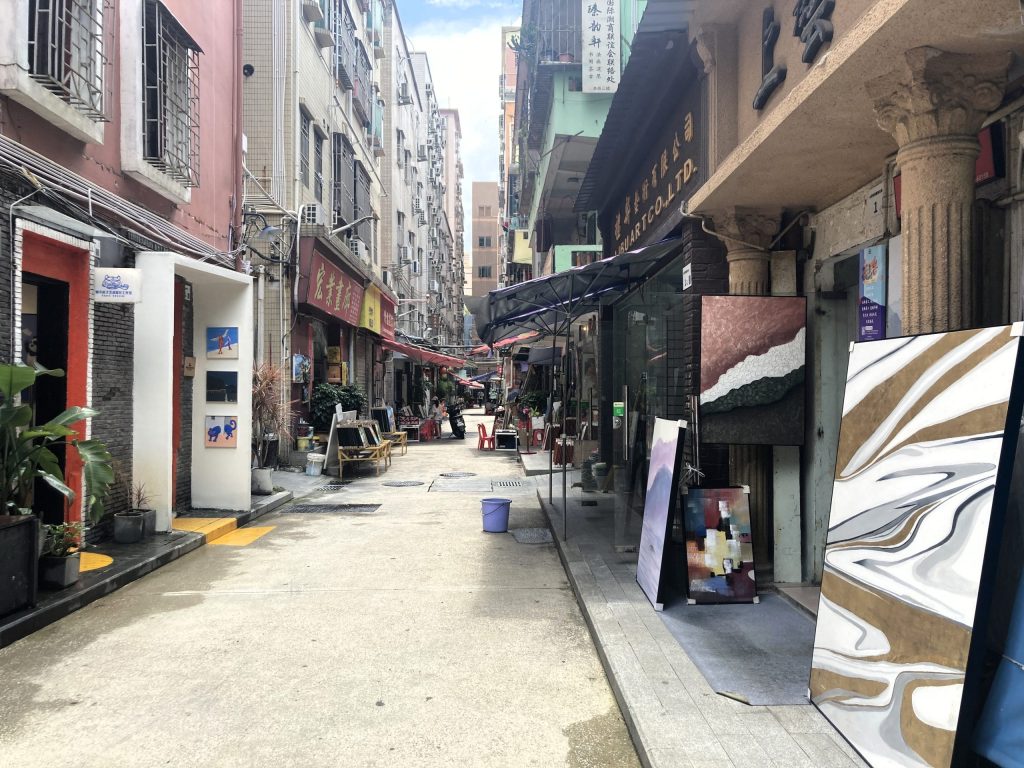
1:00 p.m. — Arrived at Dafen Oil Painting Village
It was an amazing place.
Across what felt like three or four entire city blocks, the streets were packed with painters’ galleries and art supply shops.
No matter where you looked, there was always a painting in sight.
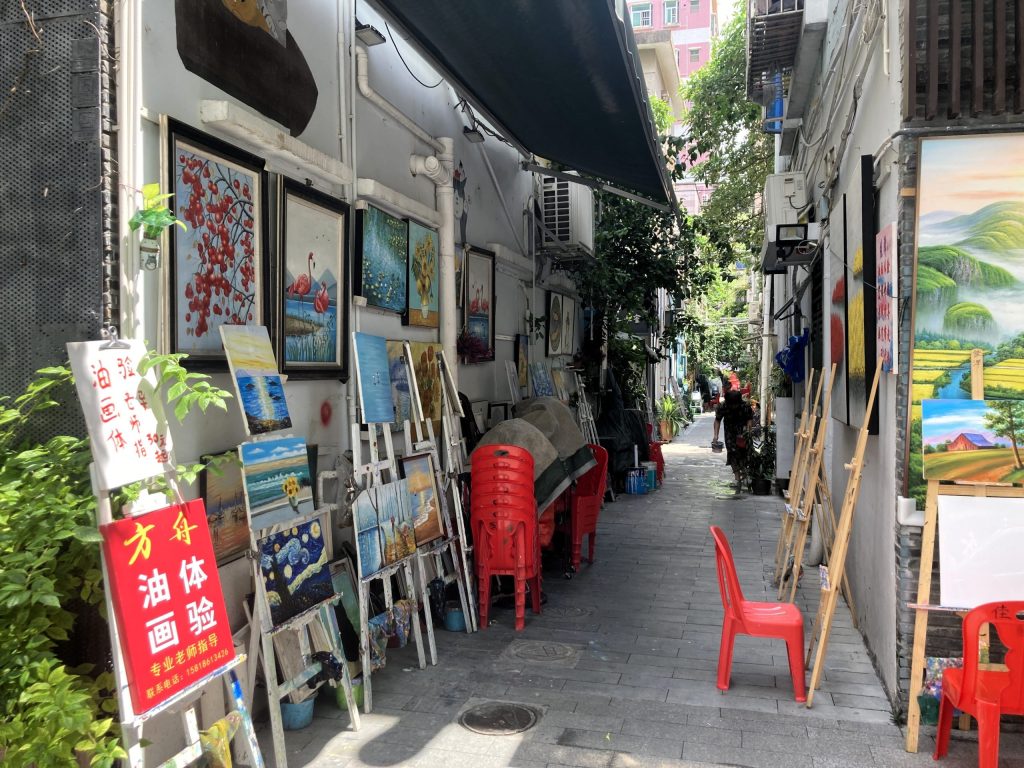
There were even oil painting workshops where you could try painting yourself.

Favorite painting #1
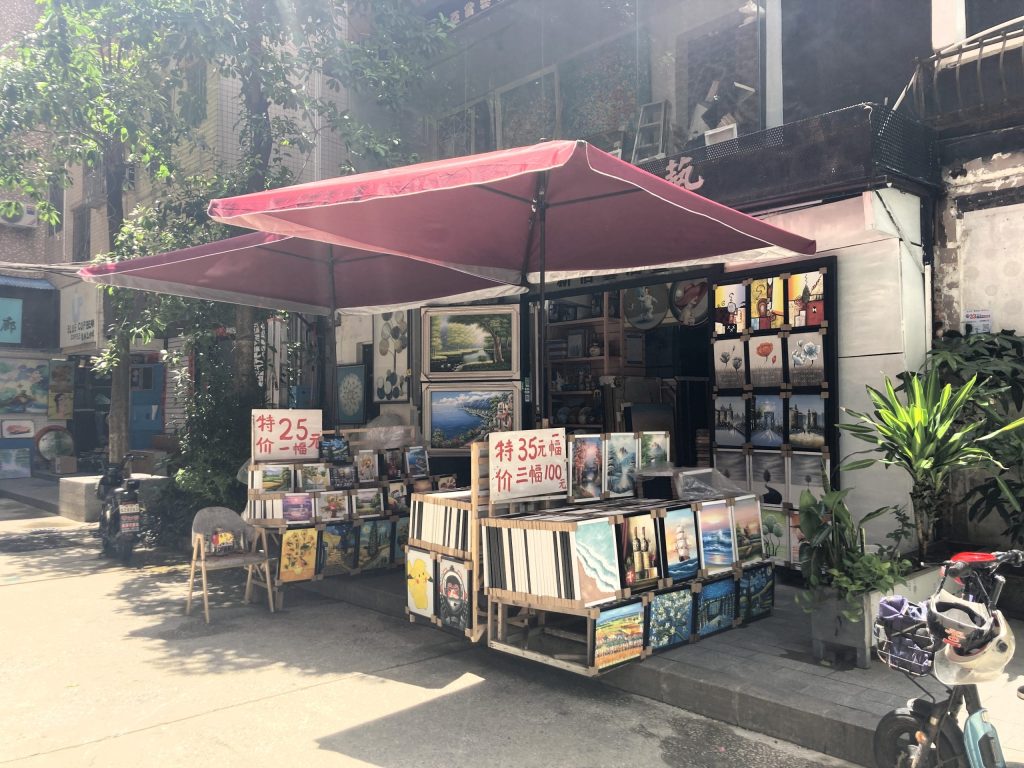
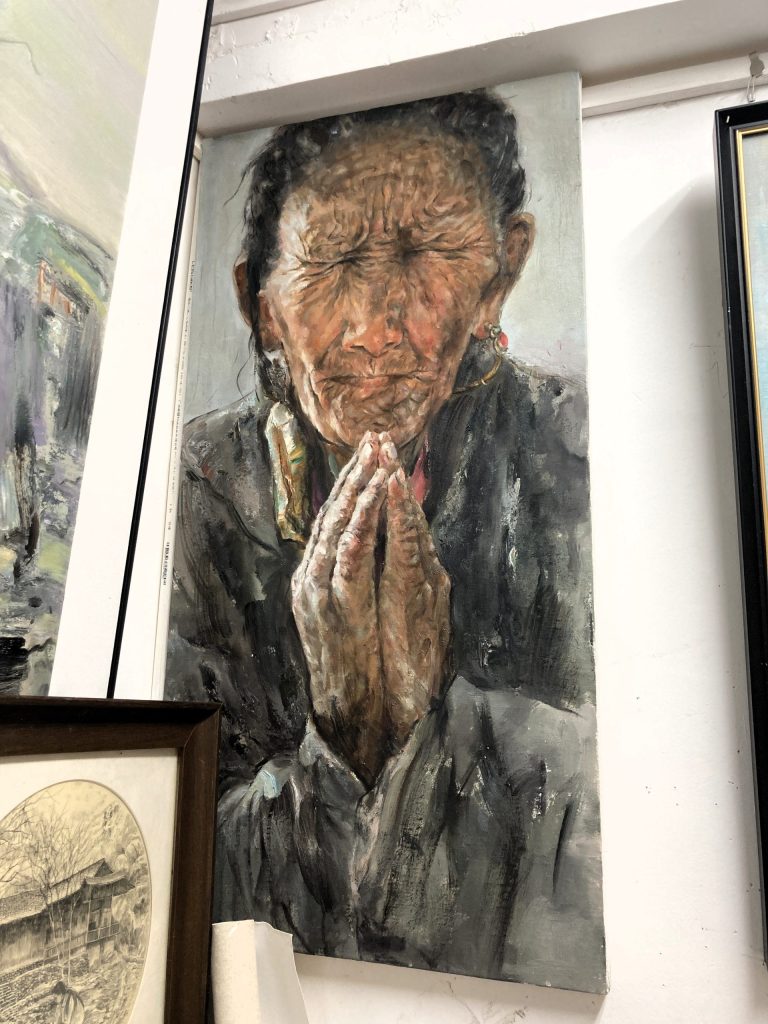
Favorite painting #2
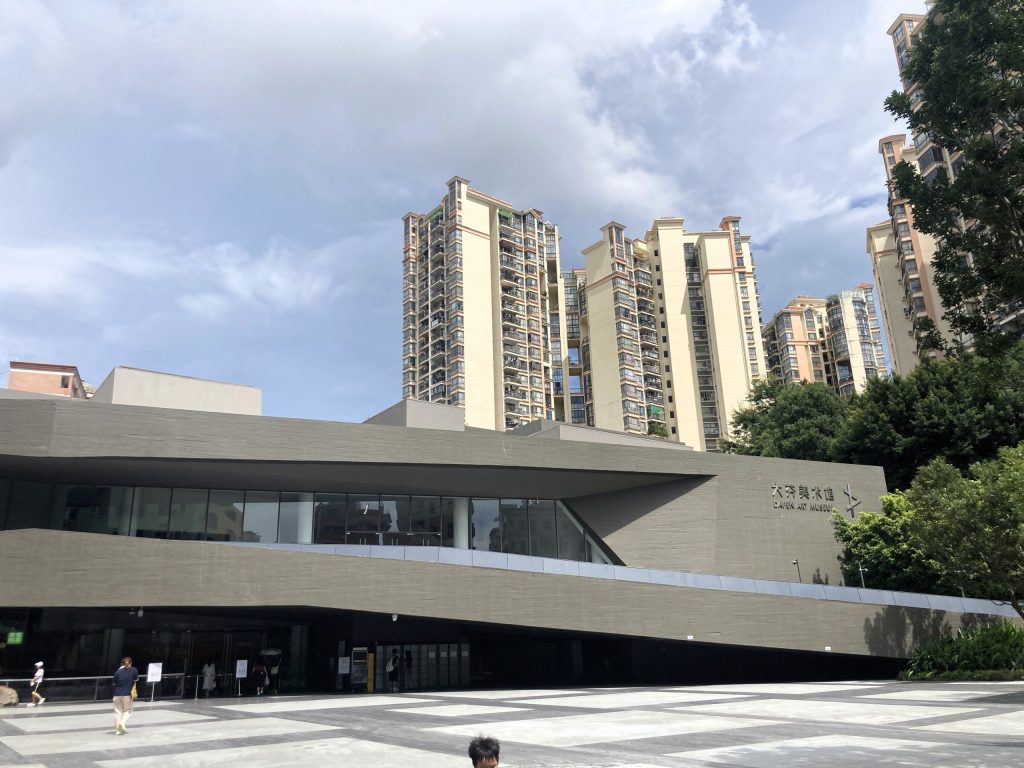
There was also a facility called the Dafen Art Museum.
If you like art, I definitely recommend it too.
4:00 p.m. — Arrived at the hotel
Hotel: Qiuguo Hotel (Shenzhen Convention & Exhibition Center Gangxia Metro Station Branch)
Price: 9,600 yen per night
The staff spoke English.
The toilet had a TOTO washlet, which made me absurdly happy.
My room had no window, but it was very clean and felt like a high-end business hotel.
Unfortunately, I forgot to take any photos.
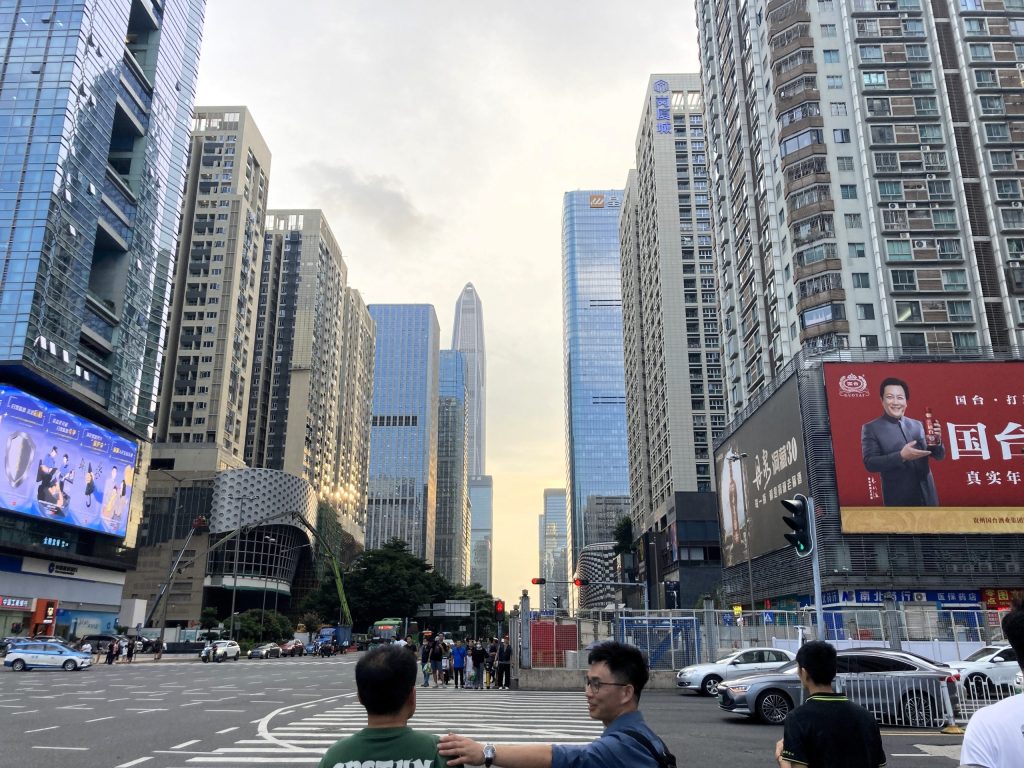
6:00 p.m. — Walk around Shenzhen
My destination was the observation deck of the Ping An International Finance Center.
At nearly 600 meters, it was apparently the fifth tallest skyscraper in the world as of 2025.
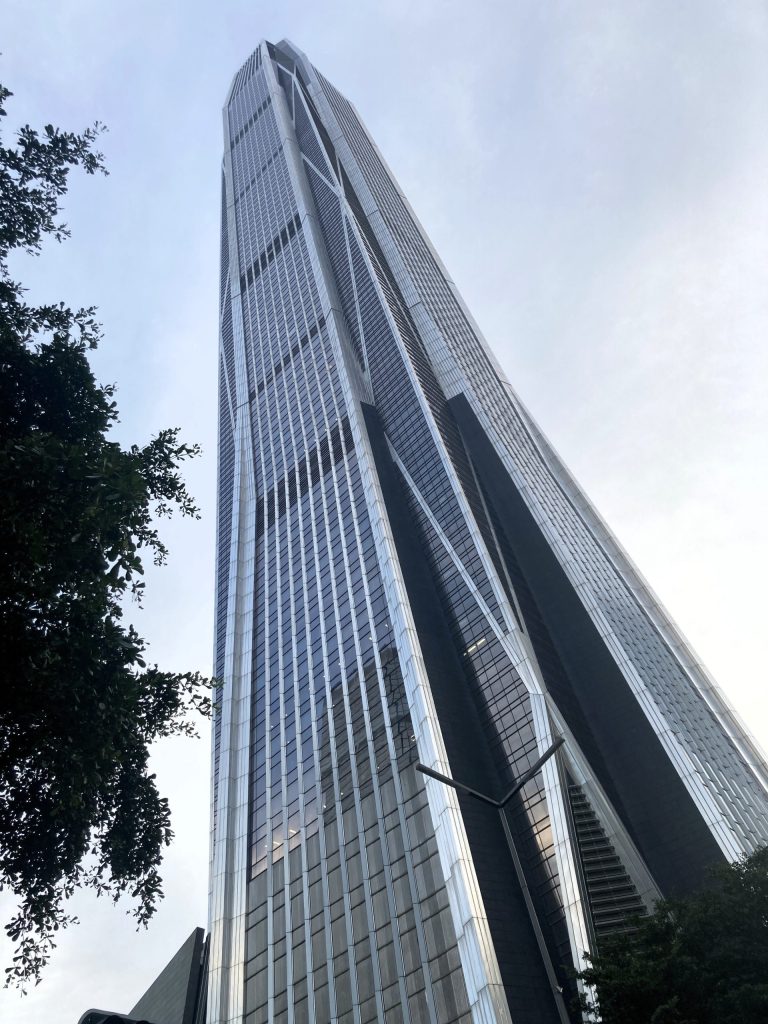
View from directly below the tower
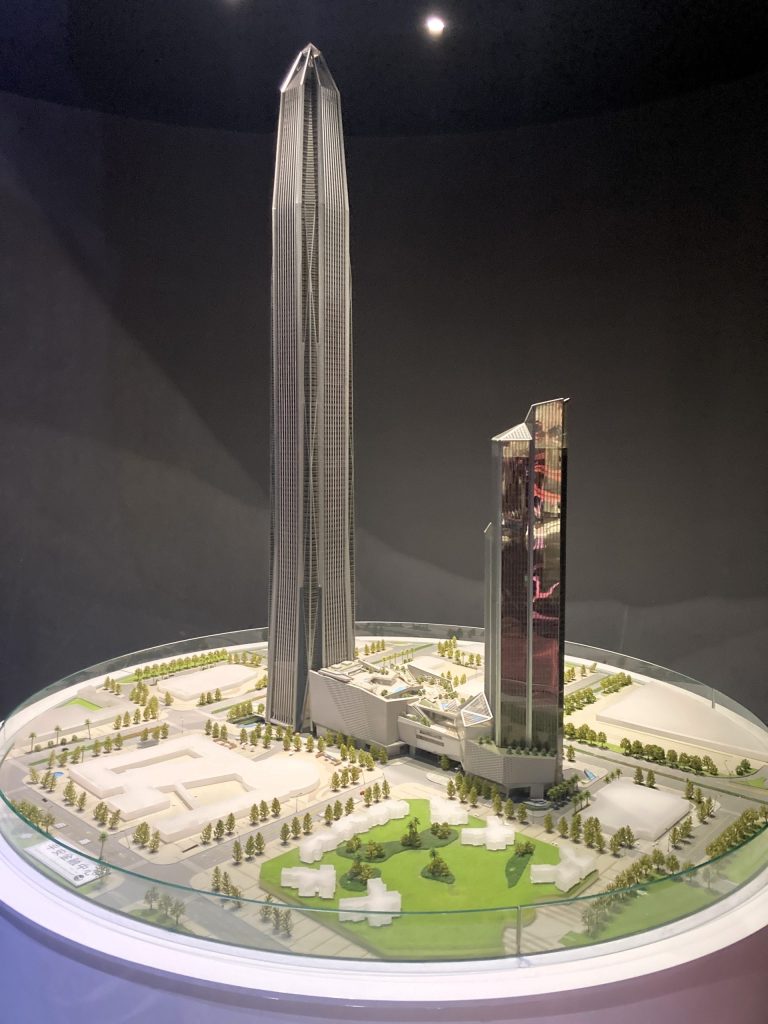
Model of the building
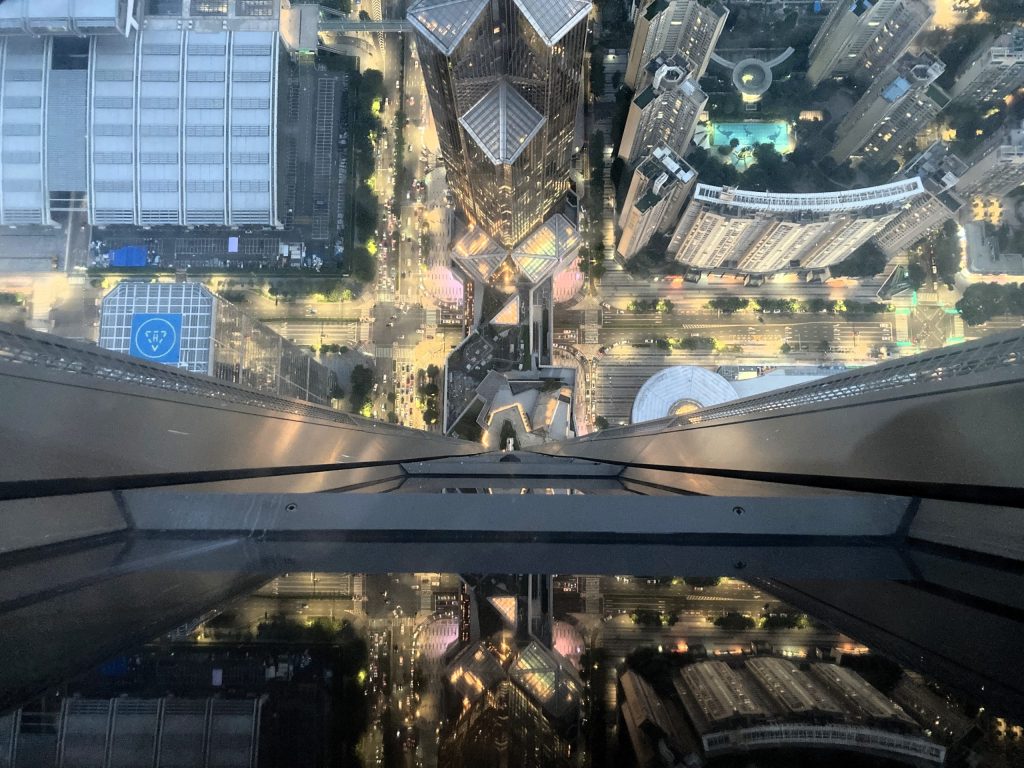
Part of the observation floor was made of glass.
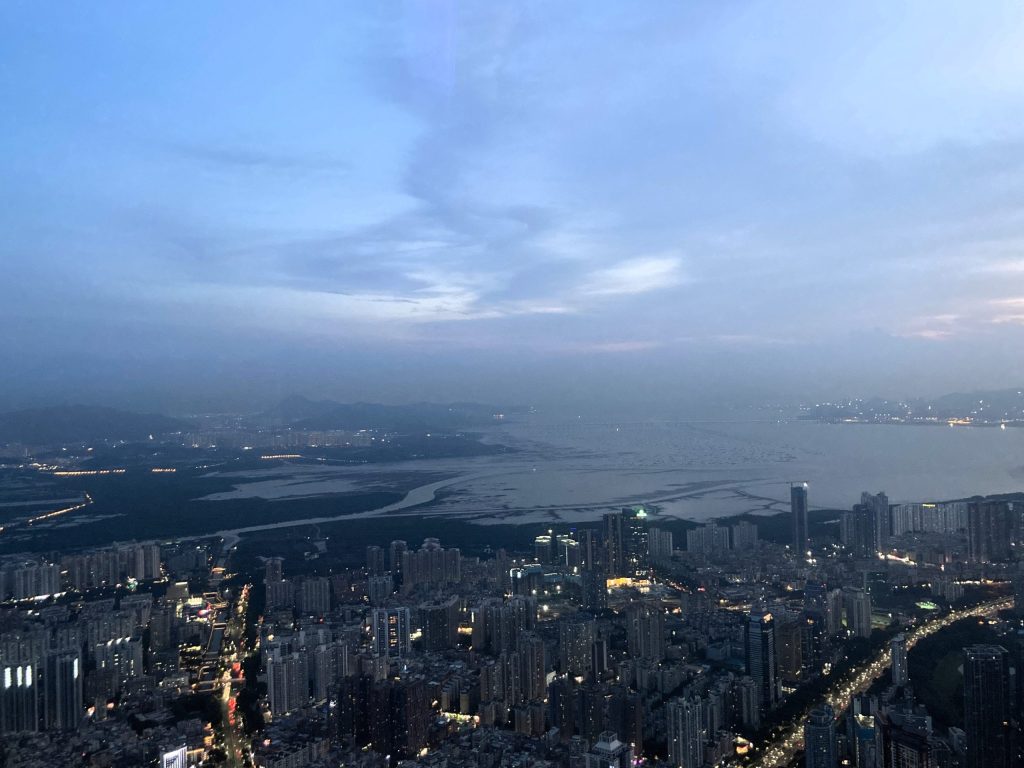
The distant view from the building was beautiful.
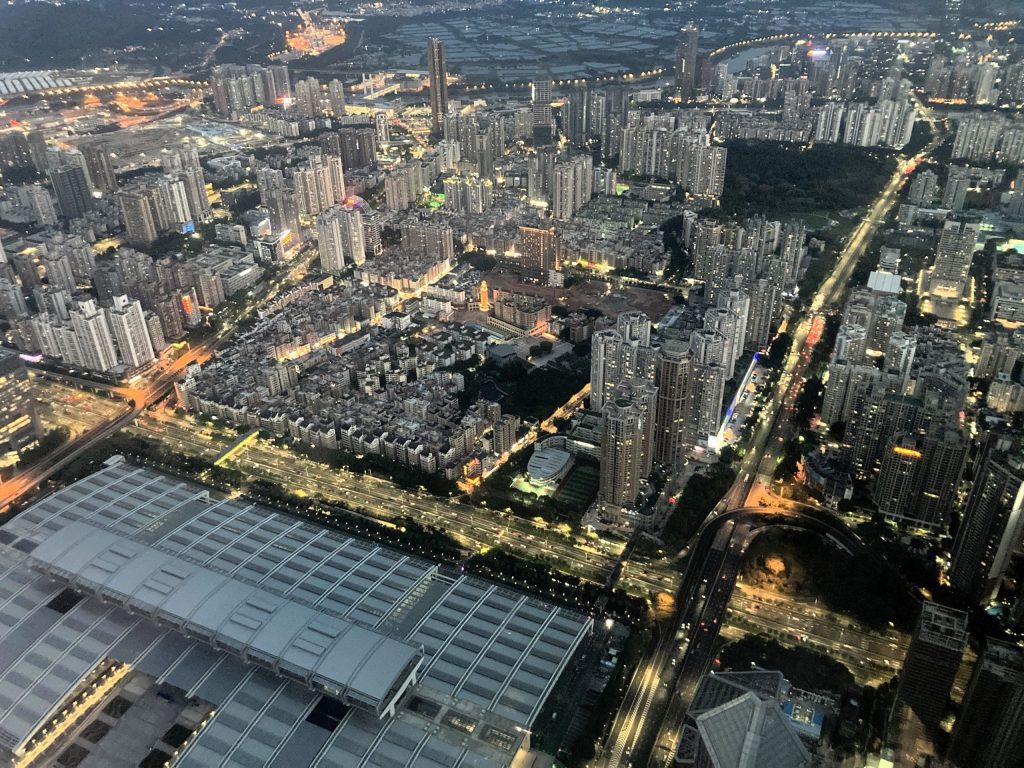
The closer city view from above gave a strong sense of “a giant city still developing before your eyes.”
10:00 p.m. — Sleep
Tomorrow, all I had to do was cross to Hong Kong on the other side and fly home.
August 16 -Going Home: Walking from Shenzhen to Hong Kong via Futian Port-
7:00 a.m. — Left the hotel
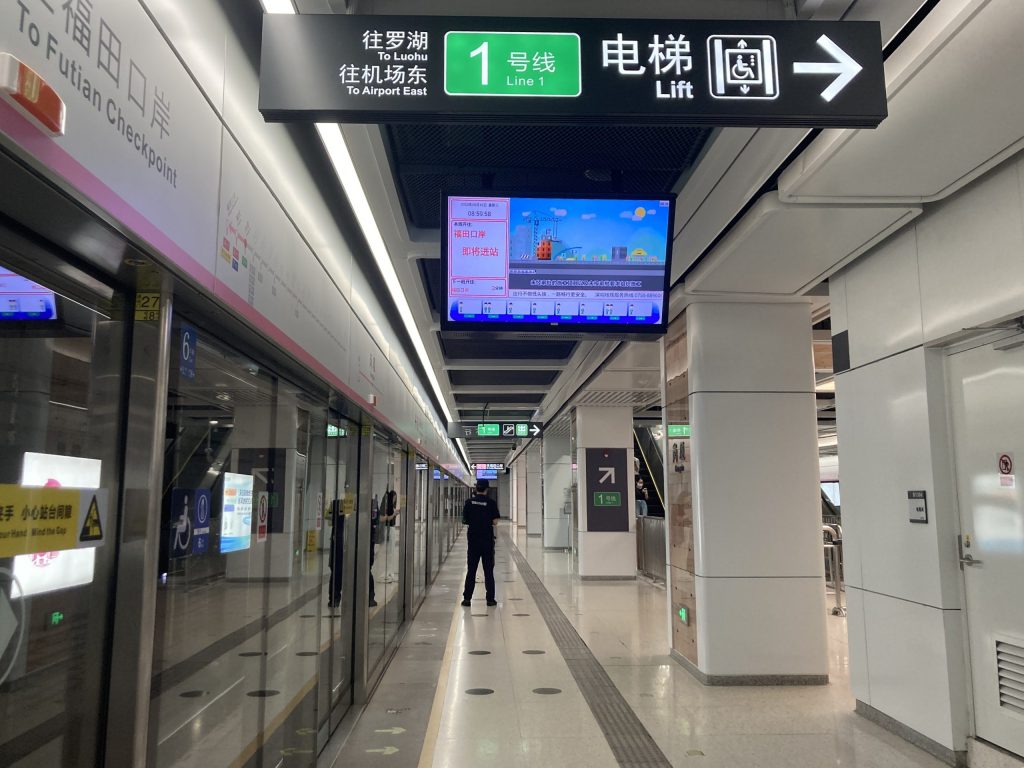
I took the subway to Futian Port Station, which is directly connected to the border control facilities.
It takes only about 20 minutes from central Shenzhen.
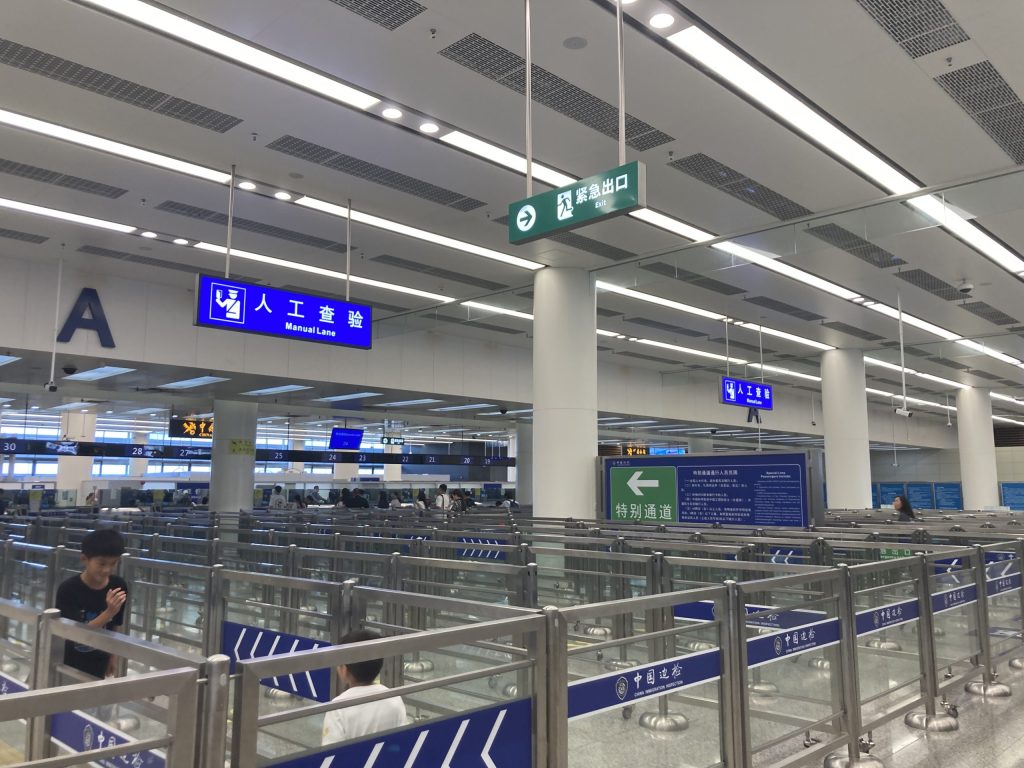
When you come up to ground level from the station, you find the immigration facilities.
First, you go through exit procedures on the Shenzhen side.
Then you walk across a huge pedestrian bridge.
After that, you arrive on the Hong Kong side and complete entry procedures there.
I left Shenzhen at 9:00 a.m. and reached Hong Kong around 10:00 a.m.
Including the procedures and waiting time, it took longer than I expected.
From the Hong Kong-side border facilities to Hong Kong International Airport, it takes surprisingly long as well—about 1.5 hours by train and bus.
A taxi gets you there in around 40 minutes, but costs roughly 4,000 yen.
I was cutting it close, so I chose the taxi.
11:00 a.m. — Arrived at Hong Kong International Airport
It took longer than expected.
My flight was at 12:30 p.m., so for an international departure I really didn’t have much margin.
Where did I lose time?
Mostly after arriving in Hong Kong.
I had wrongly assumed that Hong Kong’s payment system would be just like mainland China’s, where QR payments are enough for everything.
So when I got there and realized that cash and credit cards were still the main methods, I ended up wasting time trying to withdraw cash.
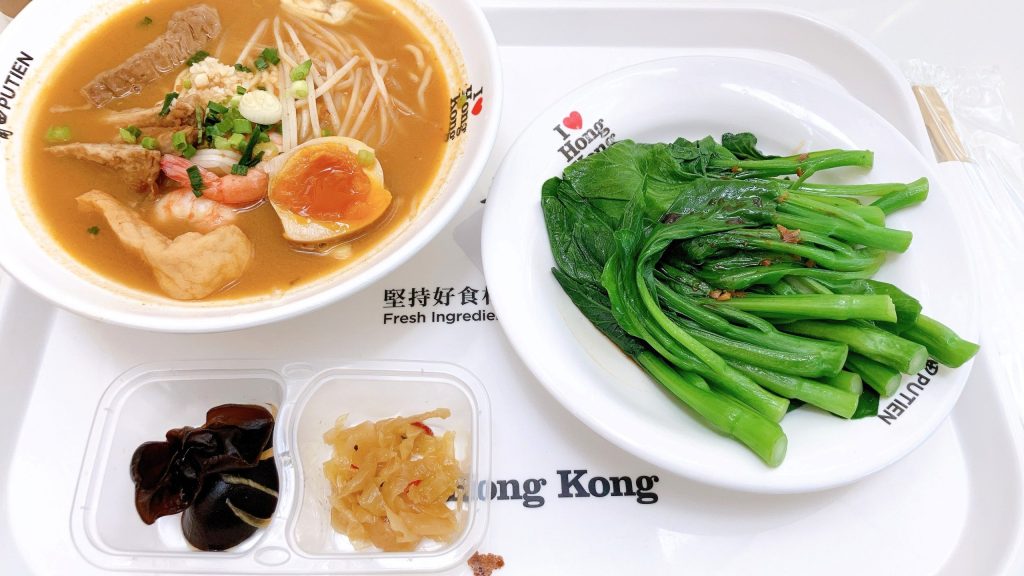
12:30 p.m. — Lunch at the airport, then departure
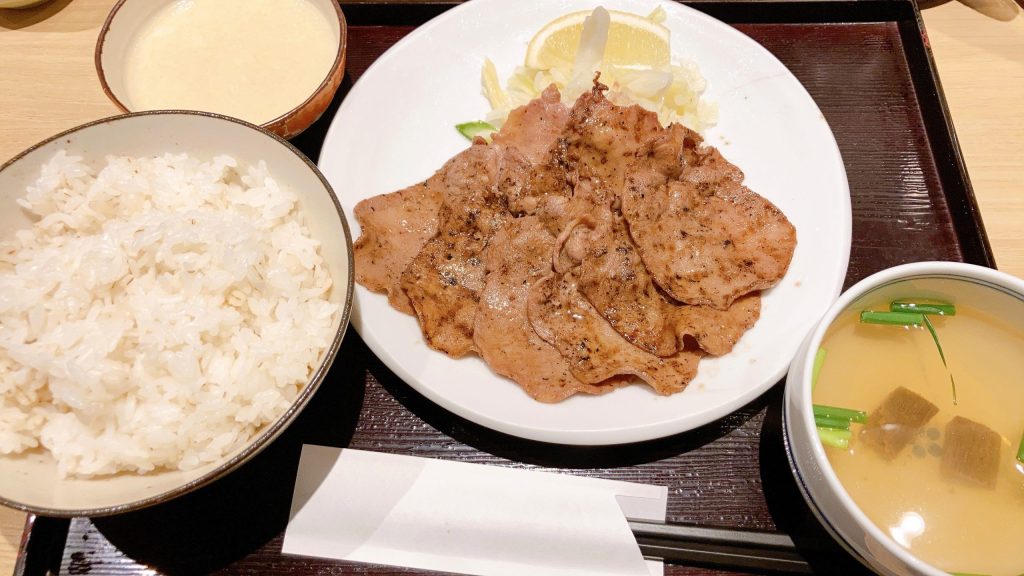
5:30 p.m. — Arrived at Fukuoka International Airport
To wrap up the trip, I had dinner at Tanya HAKATA in Hakata Station.
Japanese food is amazing.
And with that—back to work tomorrow.
Travel Cost Summary

Here is a summary image of the actual costs from my solo trip to China.
Transportation and accommodation alone came to about 200,000 yen.
- Flights: 153,000 yen
- High-speed rail: 16,700 yen
- Accommodation: 28,800 yen
I’ve listed the breakdown of each of these, so I hope it can help with your own travel planning.
Related Books : Lonely Planet China (Travel Guide)
Amazon Links
Lonely Planet China (Travel Guide)


コメント